
Learn about sustainable forestry, Hem-Fir, and how thermal modification creates higher-value wood products.
A practical guide to Hem-Fir and thermally modified wood.
Hem-Fir is not a single tree species. It is a commercial species group, made up primarily of Western Hemlock and Amabilis Fir in coastal British Columbia. These species grow together naturally, share similar appearance and performance characteristics, and are commonly processed and marketed together as one lumber category. For mills, distributors, builders, and specifiers, Hem-Fir is a practical way to describe a group of coastal softwoods with similar strength, stiffness, density, colour, and working properties.

Hem-Fir: Two species, one working forest.
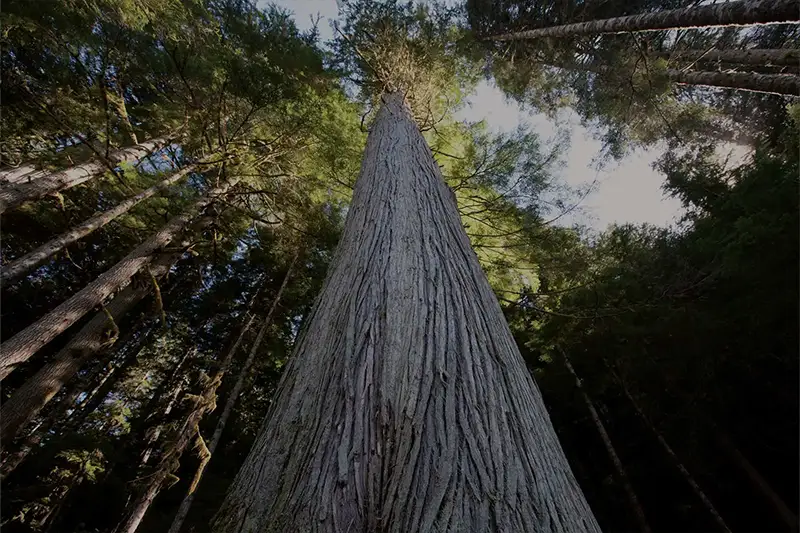
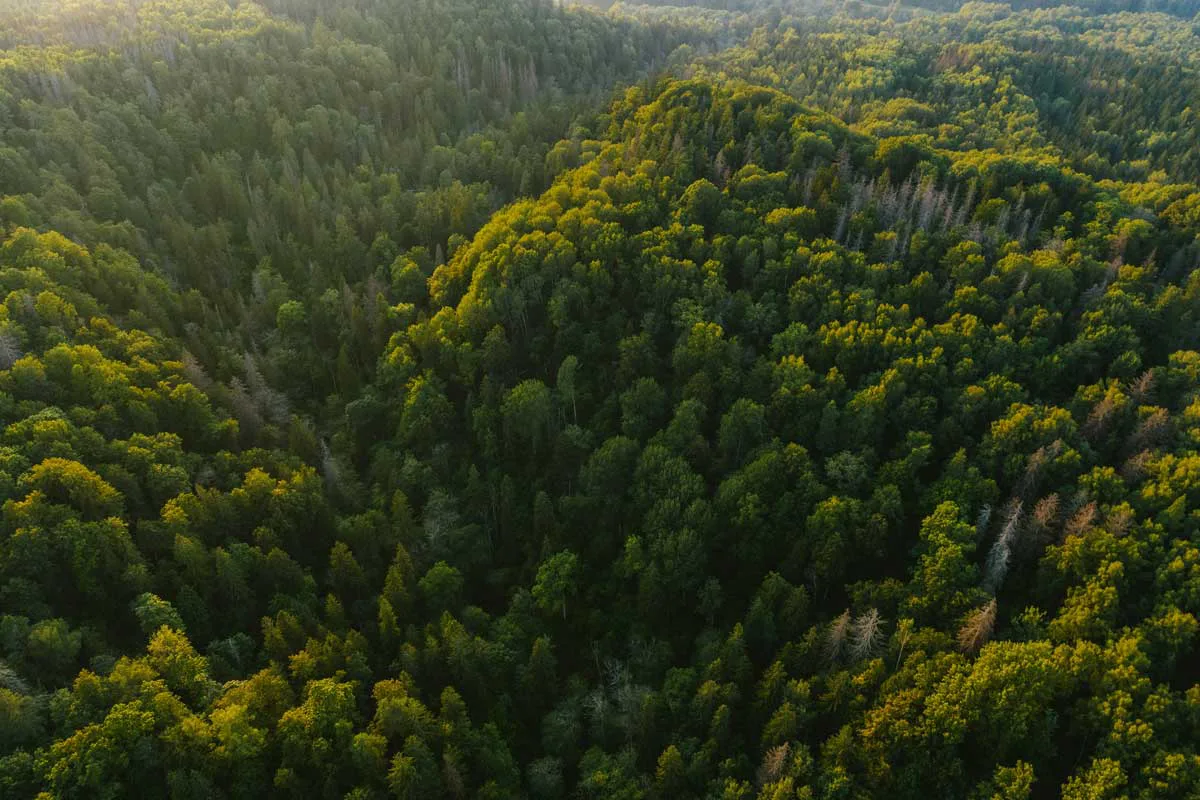
Western Hemlock and Amabilis Fir are grouped because they grow in the same coastal forests and produce wood with comparable properties. Both species can grow into large trees, often reaching 30 to 50 metres in height, with long trunks that can produce both clear and knotty grades.
Hem-Fir is known for its light, uniform colour, fine straight grain, strength, stiffness, and workability. Western Hemlock is non-resinous, sands smoothly, glues easily, has strong nail and screw holding ability, and accepts stains and finishes well. Amabilis Fir also planes and shapes well, sands to a smooth finish, glues easily, and takes a good finish.
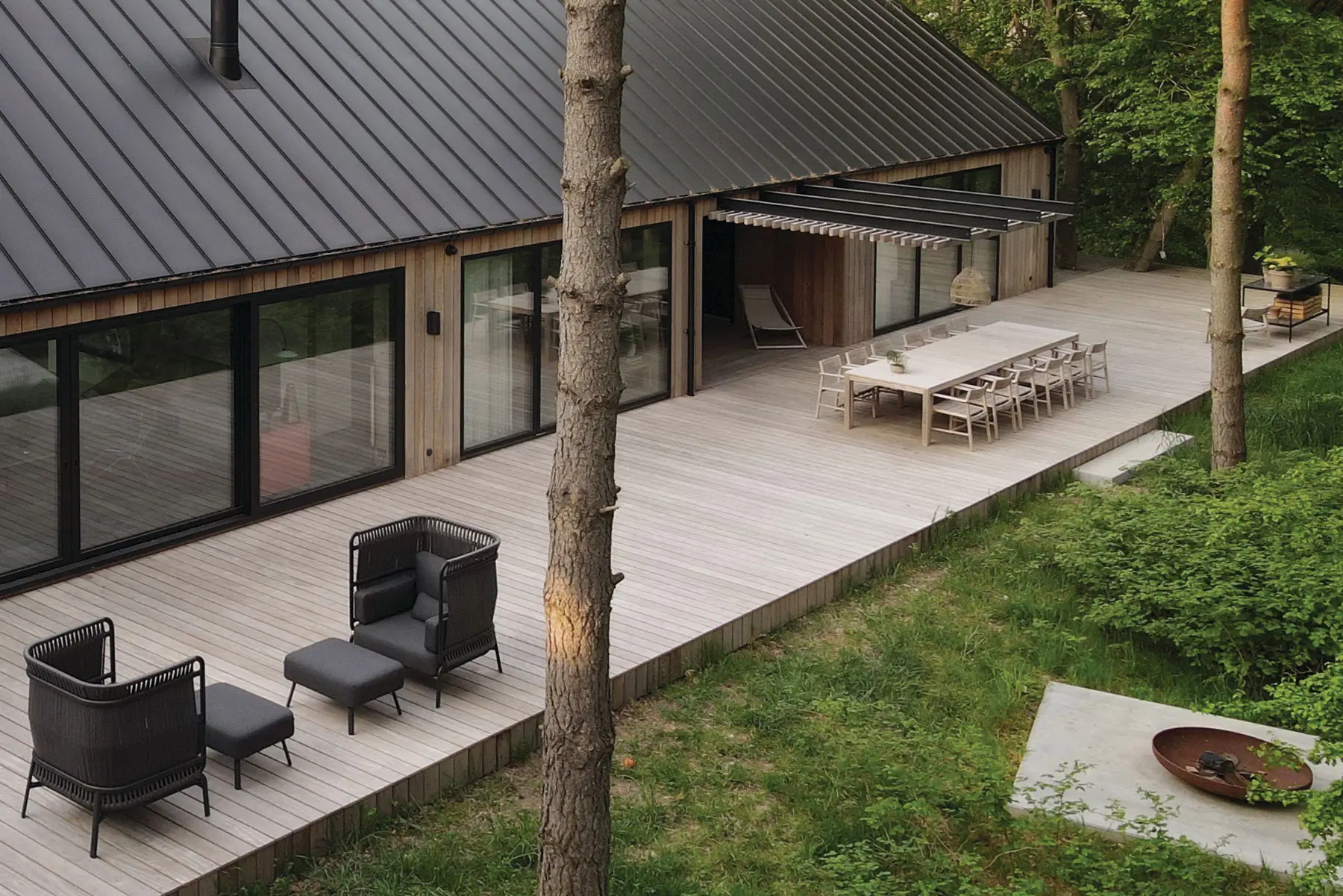
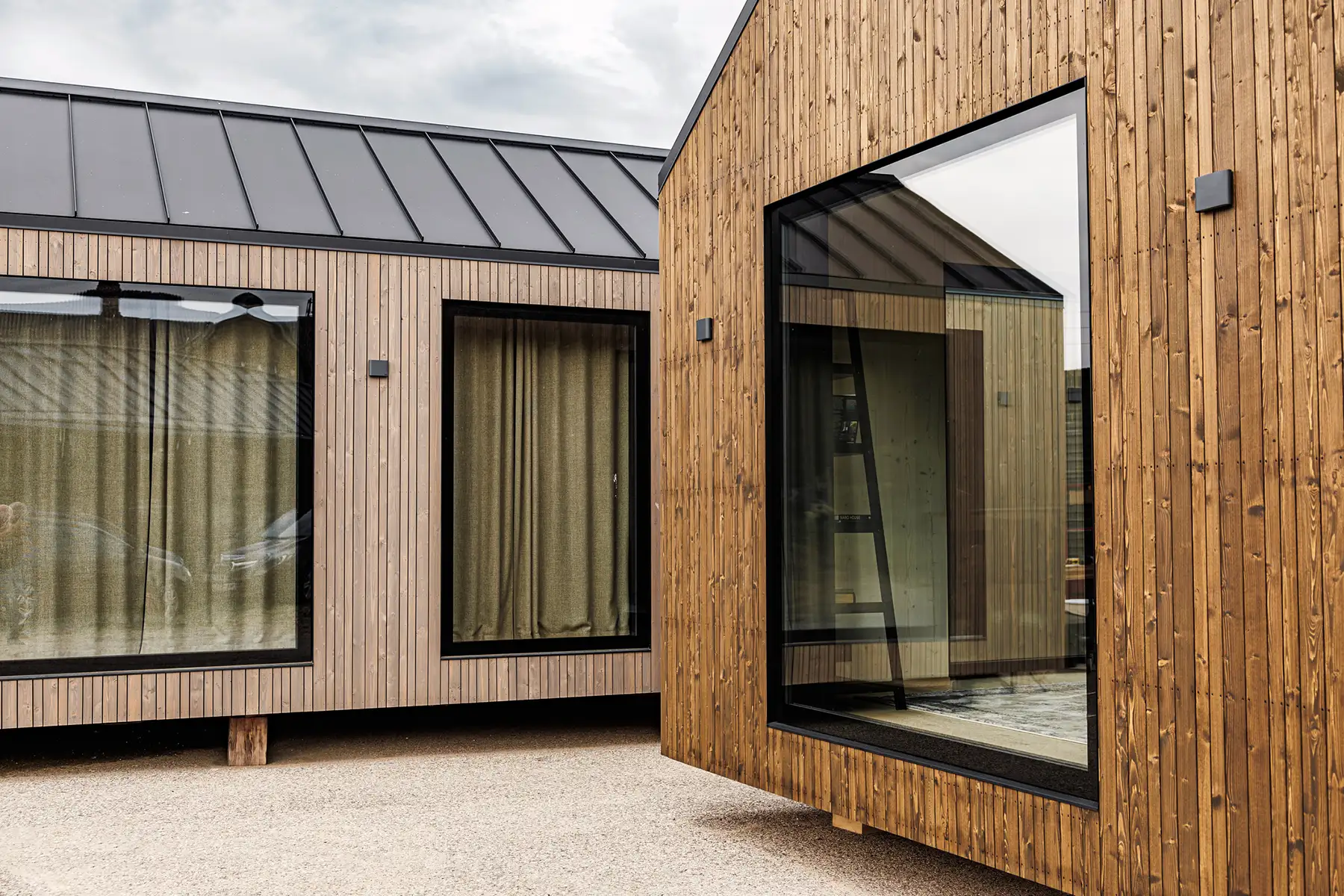
Those attributes are important for product development. A species group that is strong, visually consistent, easy to machine, and receptive to finishing gives us room to innovate. It is why Hem-Fir has long been useful in construction lumber, and why it has real potential in architectural wood applications such as siding and decking that demand refined appearance grade aesthetics
Plant what belongs.
We do not simply replant trees by habit. Our reforestation work is guided by what is ecologically appropriate for each harvested site. We design long-term harvesting plans and monitor our activity to ensure we harvest the same profile of species that occur naturally, with planting choices reflecting what is growing in the area approved for harvesting.
That approach aligns with broader B.C. forestry practice. Reforestation is a legal obligation after harvest in British Columbia, and seedlings are selected to succeed within specific site conditions. Tree planting can also help accelerate regeneration, adjust species composition based on current and future climate, and address anticipated market demands.
‘Thermal modification gives us a way to turn abundant coastal fibre into high-value products that are sustainable, non-toxic, and economic when compared to synthetic alternatives.’
Sustainable forestry is not about forcing the forest to produce yesterday’s product mix forever. It is about understanding what the land is growing, then building the science, manufacturing, and markets to use that fibre responsibly.
It starts with a seed. Fifteen million of them.
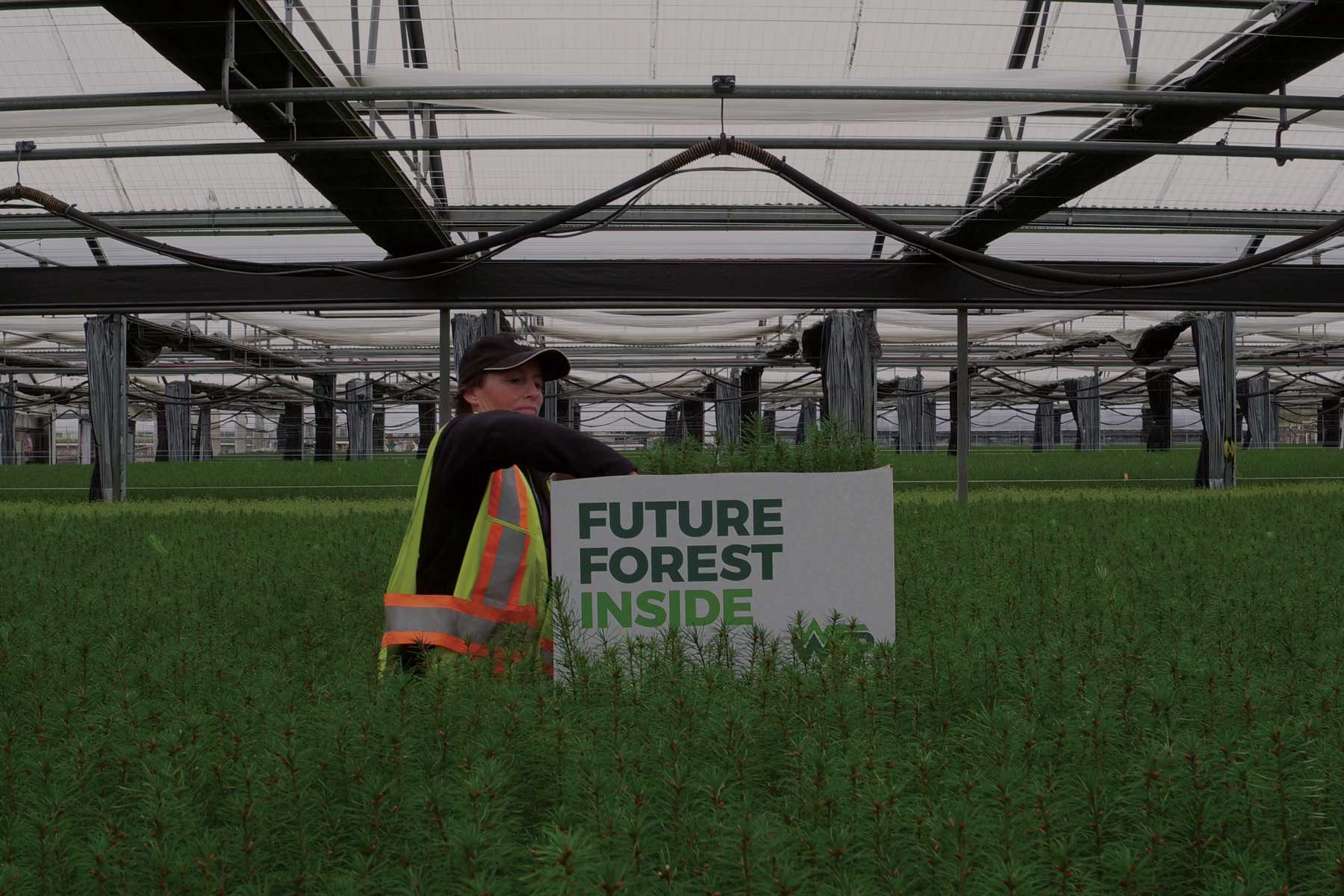
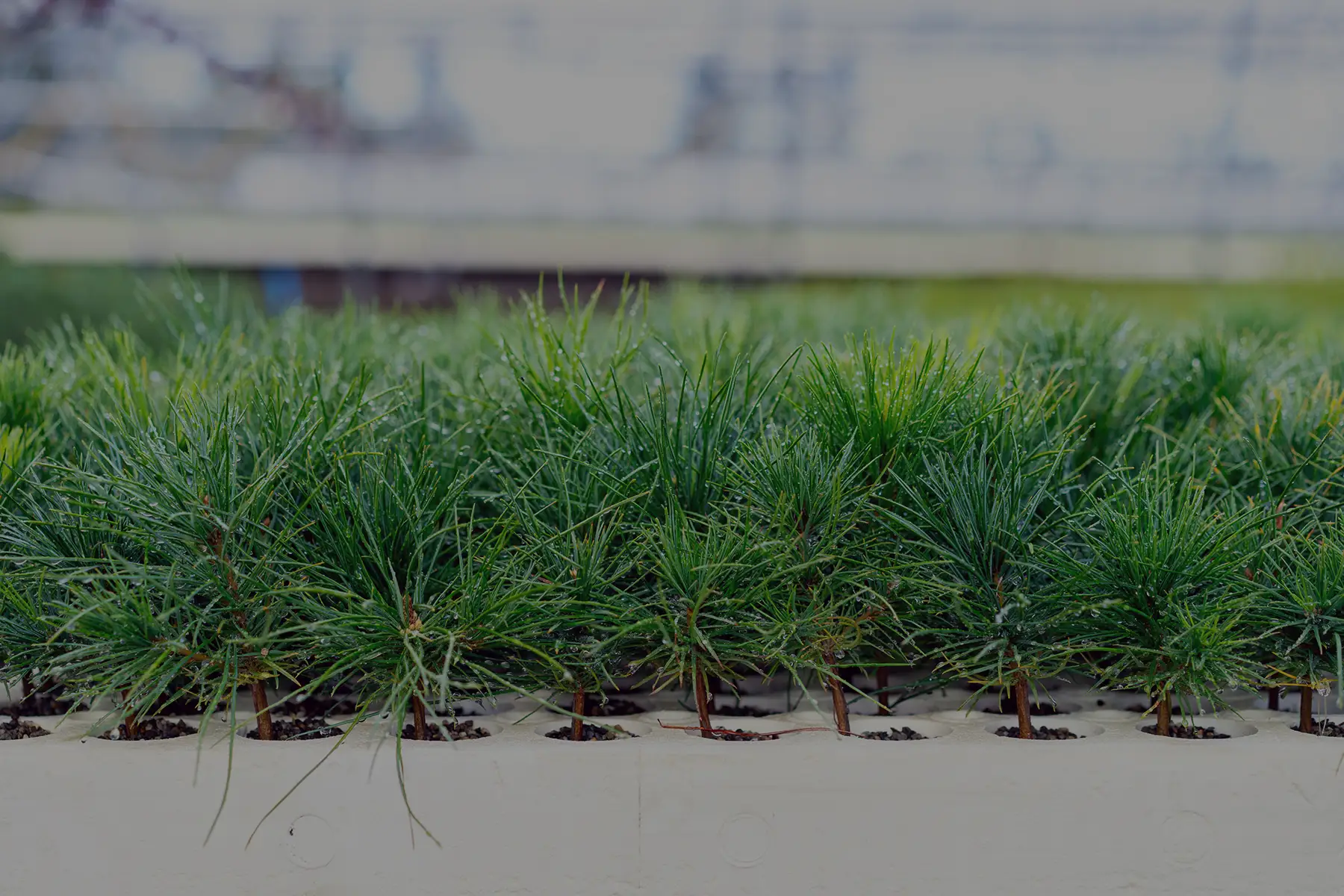
Our Saanich Forestry Centre is part of that long-term view. We are the only forestry company on B.C.’s coast to operate our own seed orchard and tree nursery. Established in 1964, the centre spans 26 hectares with 27 greenhouses, producing approximately 15 million seeds annually and roughly 4.5 million seedlings each year across 10 species.
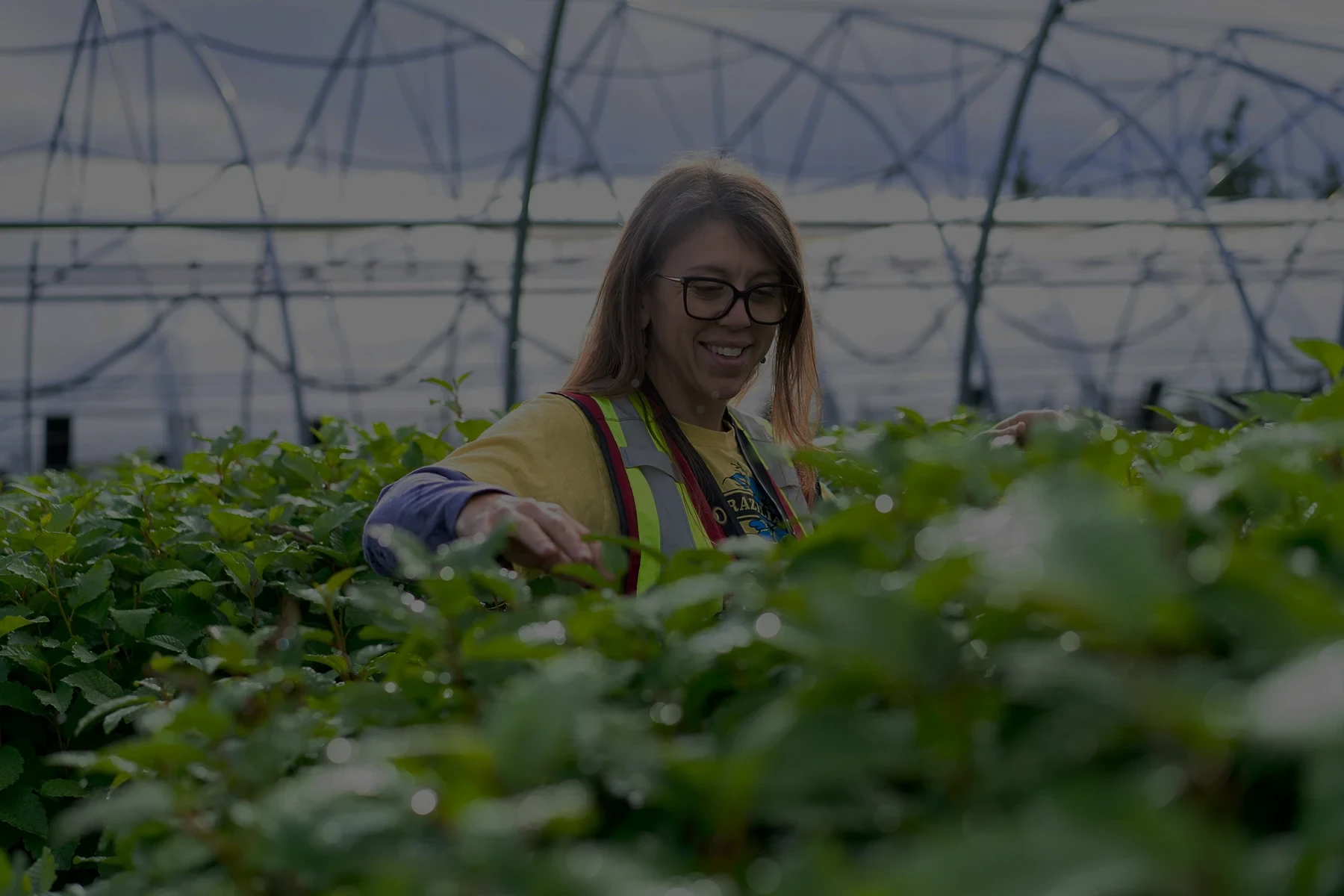
British Columbia uses a mix of more than 20 native tree species in reforestation programs, helping maintain ecosystem processes, resilience, and diverse habitats. Our own reforestation lifecycle includes site preparation within one year of harvest, reforestation within one to two years, vegetation management over years two to ten, and monitoring for up to 20 years.
Trees are not inventory that can be reordered overnight. Forestry decisions made today shape fibre supply, forest health, manufacturing options, and community economics decades from now.
A local, renewable, and scalable fibre base.
Hem-Fir gives us a local, renewable, and scalable fibre base. It supports supply continuity. It reduces dependence on scarce or imported materials. It gives us room to create a Pacific Northwest wood platform rooted in the actual ecology of coastal B.C. The problem is not that Hem-Fir is abundant. The problem is that abundance needs the right product strategy.
A better future for Hem-Fir.
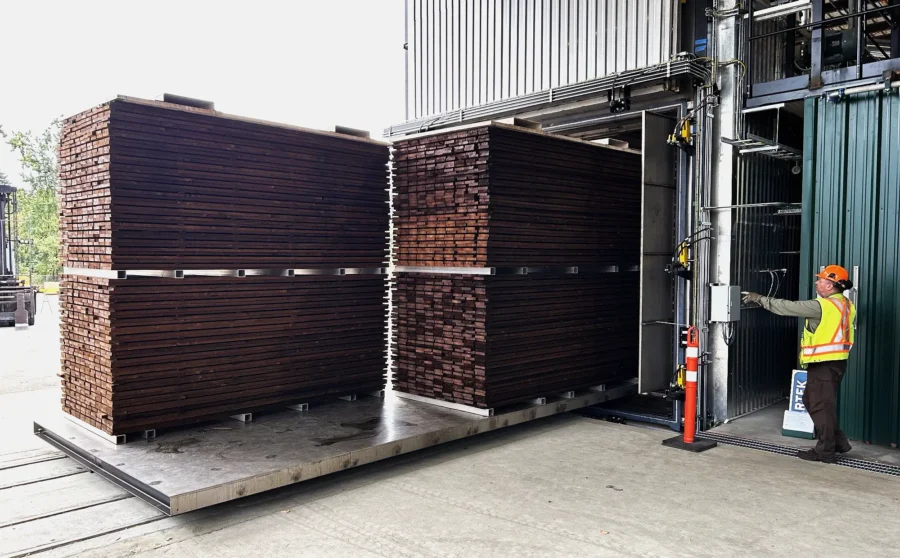
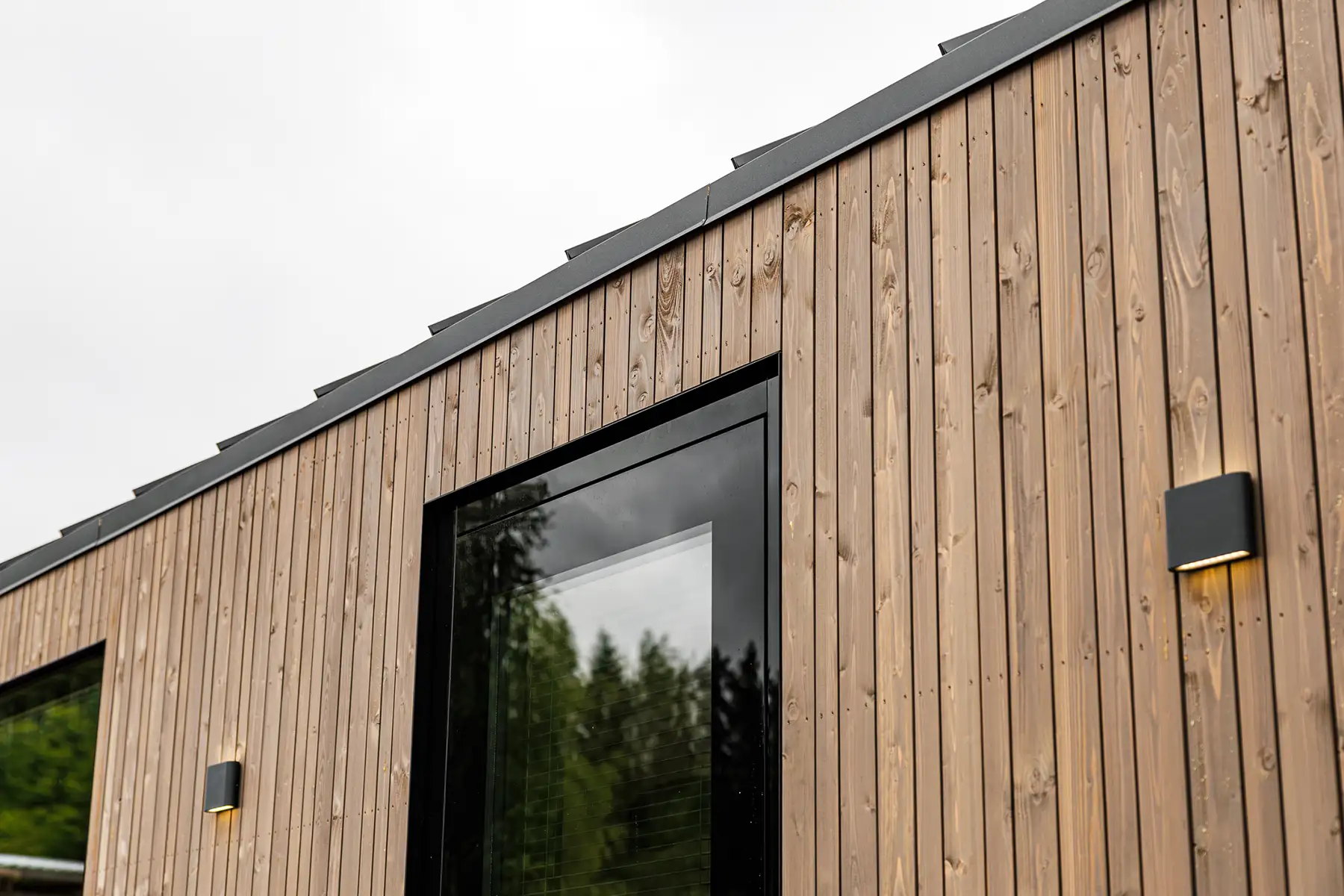
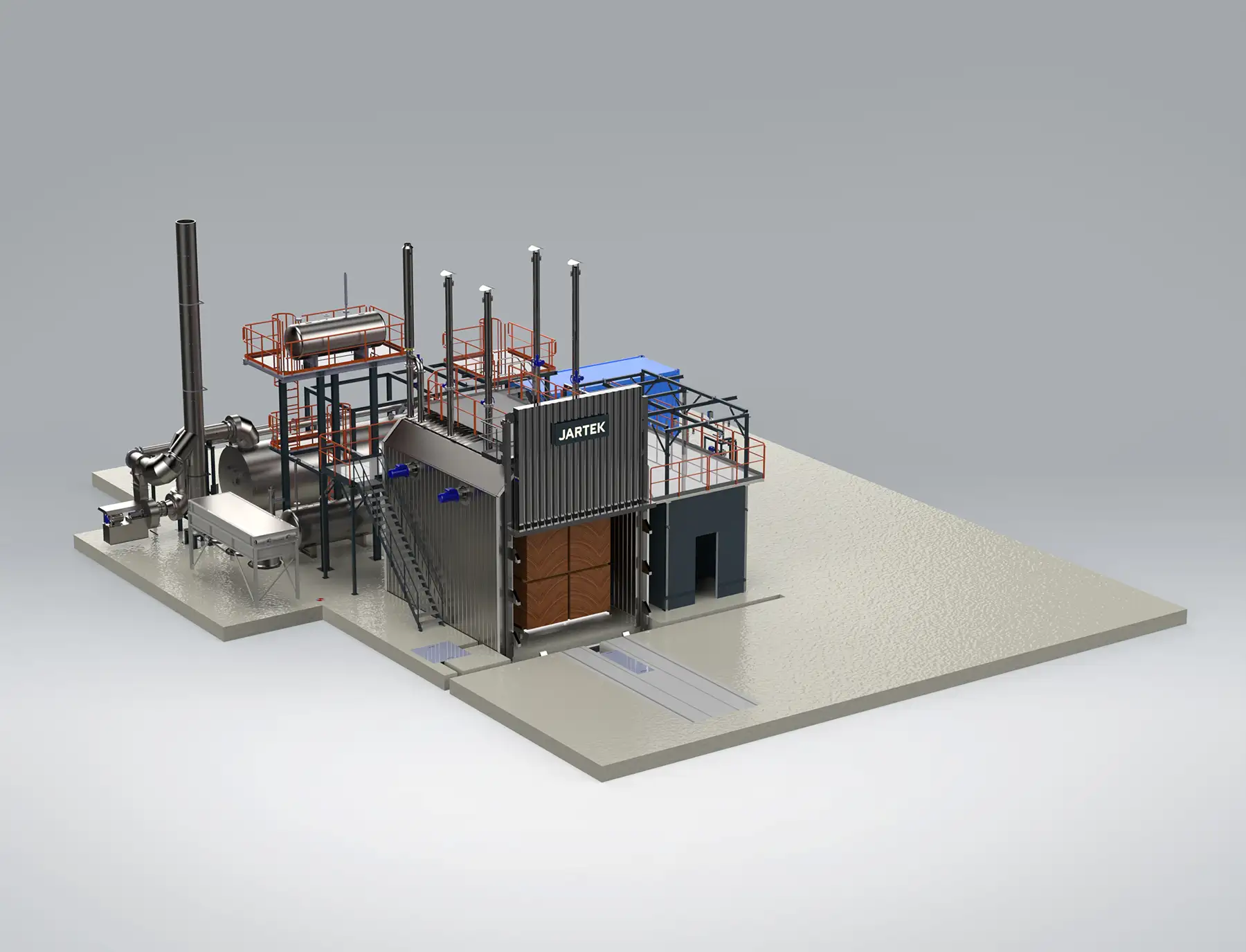
Thermal modification is a controlled process that changes wood at elevated temperatures. Our process uses heat and steam, with no added chemicals, to change the wood’s internal structure and enhance its properties.
During thermal modification, hemicellulose is the first wood component to break down, reducing the wood’s ability to absorb water and lowering the amount of simple sugars that decay organisms use as a food source. Cellulose, which provides most of the wood’s strength, stays mostly intact but becomes more stable and less sensitive to moisture movement. At the same time, lignin, the natural binder within the wood structure, becomes more rigid and stable through chemical changes that help lock the cell wall structure in place. Extractives, including oils, resins, and sugars, also partly evaporate during treatment, changing the wood’s smell and surface properties while further reducing nutrients available to insects and decay fungi. Together, these changes make thermally modified wood more dimensionally stable, less moisture-sensitive, and more resistant to decay.
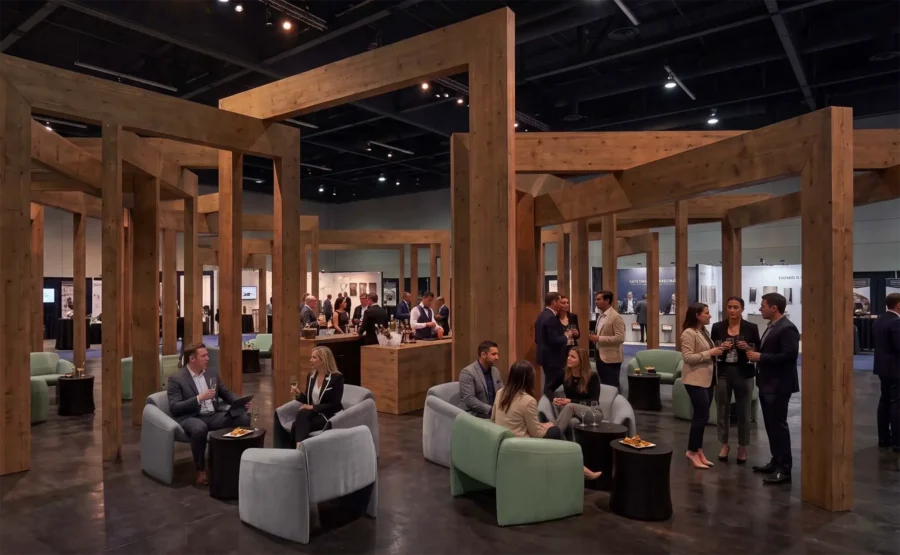
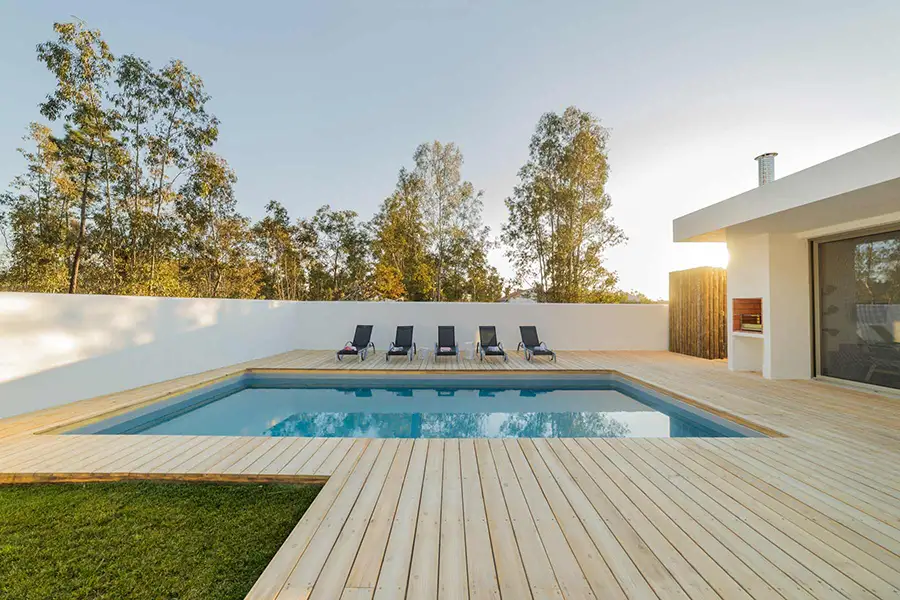
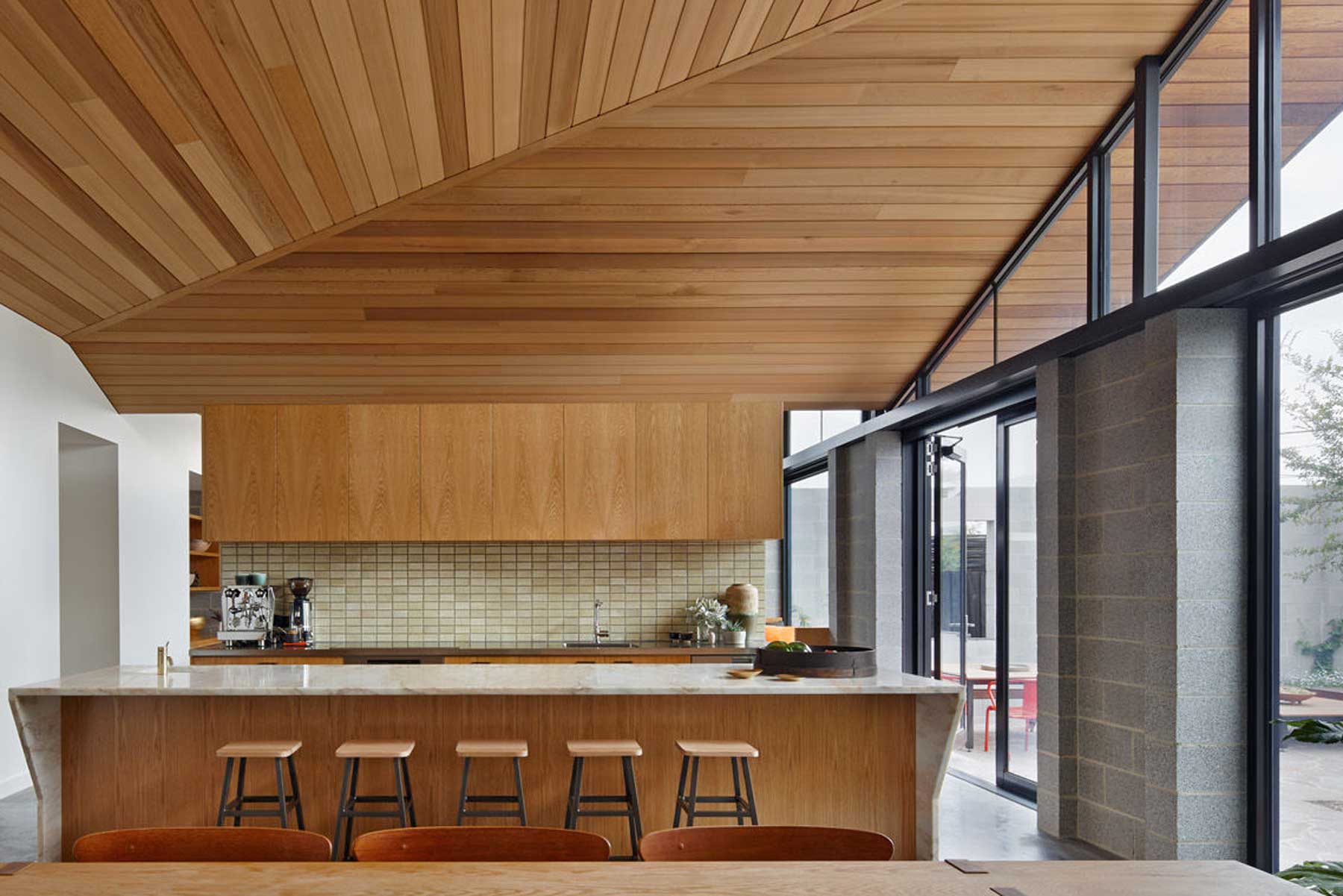
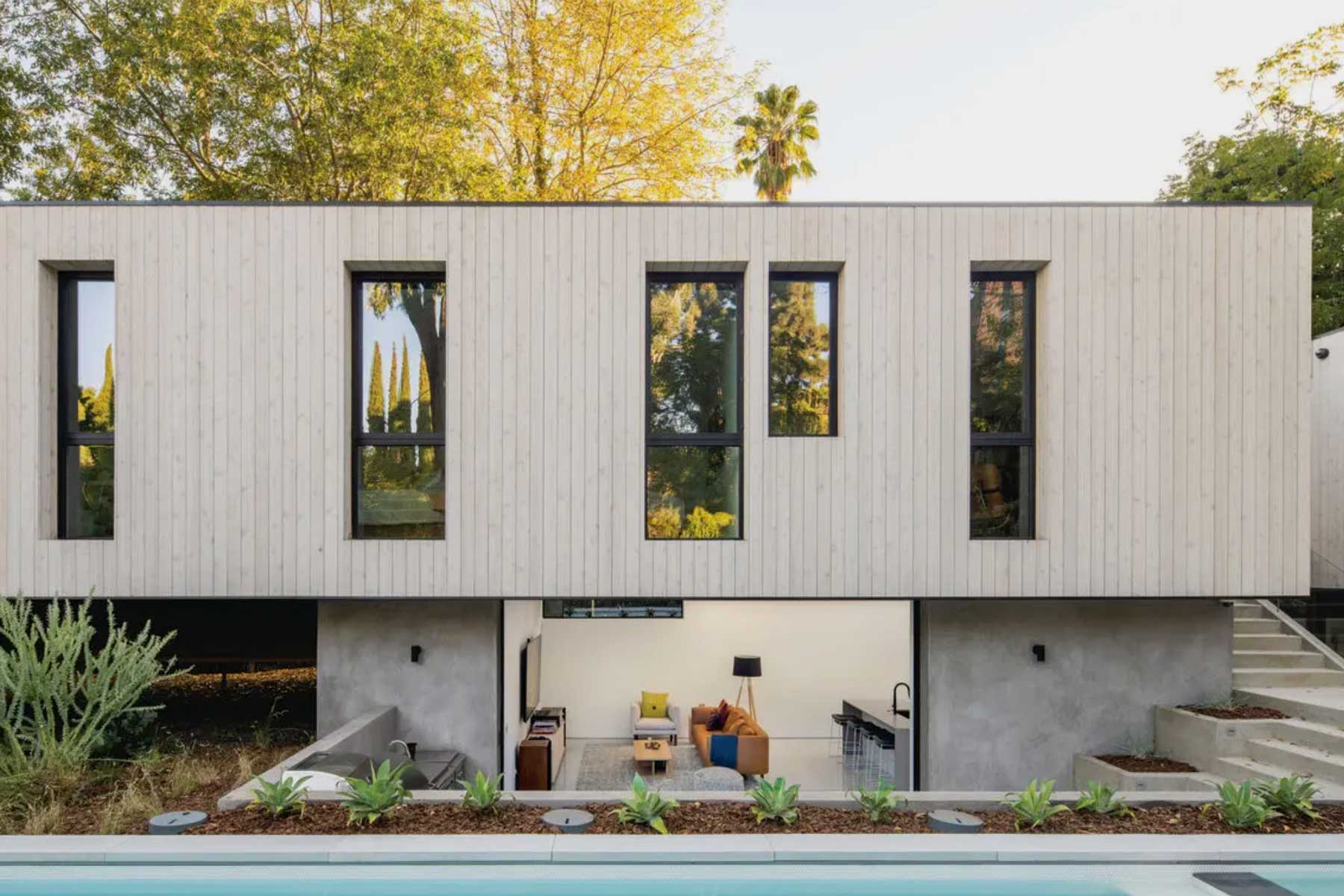
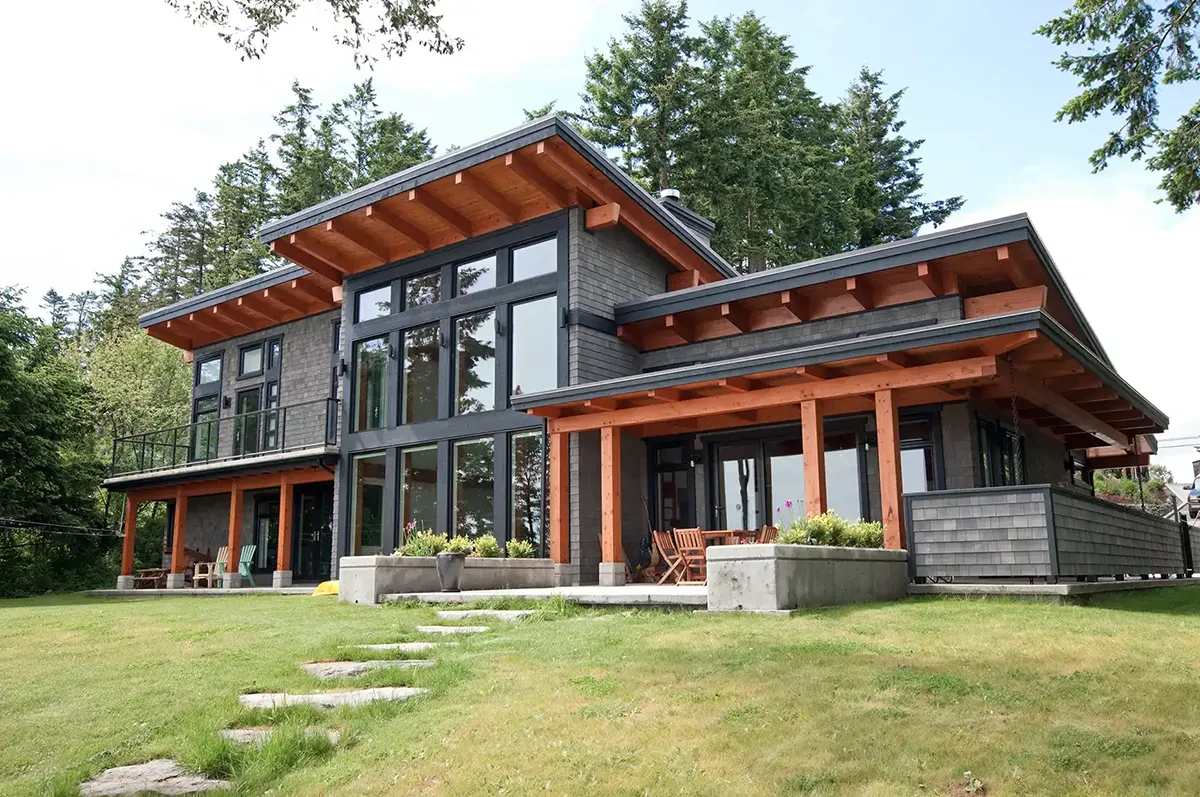
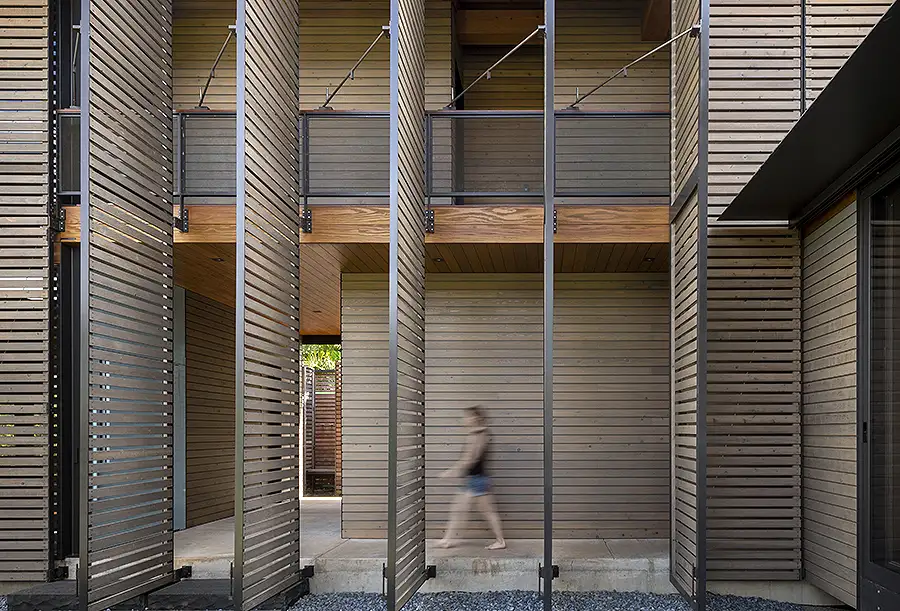
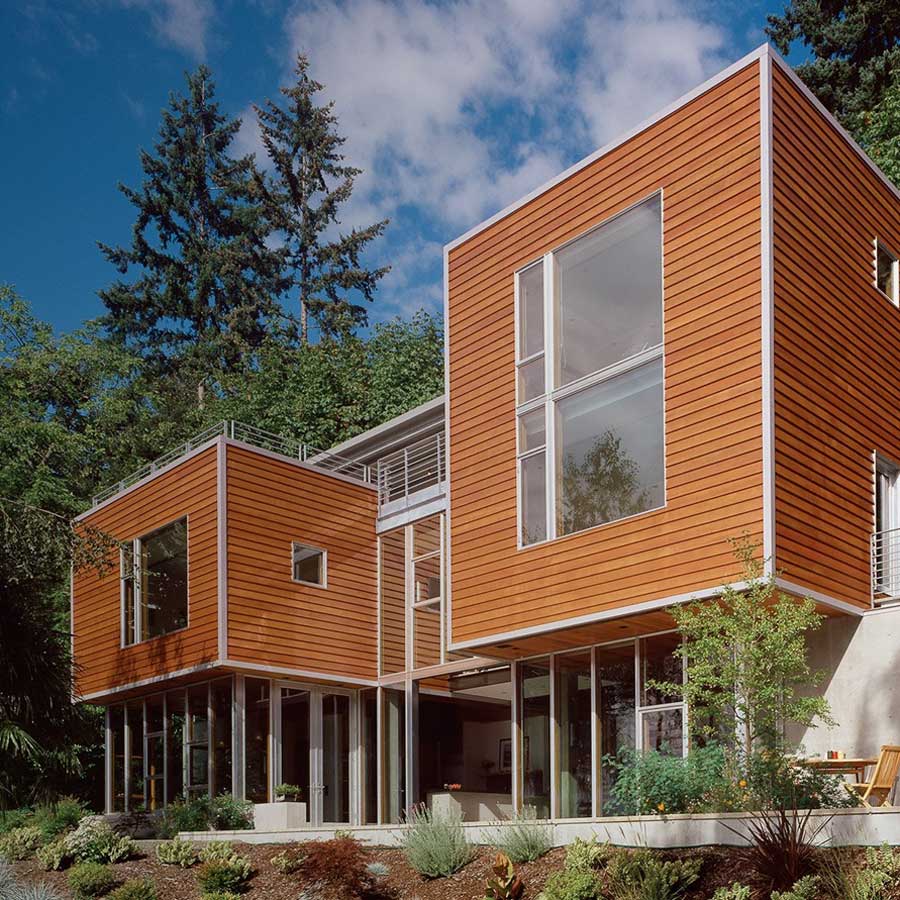
For exterior construction, those changes matter. Less moisture movement can mean reduced swelling, shrinking, and warping. Improved decay resistance can make the material better suited to exterior wood siding, thermally modified wood decking, cladding, fascia, soffits, trim, and other appearance applications, when properly tested, specified, installed, and maintained.
‘Thermally modified Hem-Fir is how we connect what the forest is growing with what the market is asking for.’
This is why Hem-Fir is a strong candidate for thermal modification. It is abundant. It is workable. It accepts finishes well. It has a uniform appearance. It machines well. It already has strength and stiffness. Thermal modification can help move it into a more durable, stable, premium appearance category.
The future forest needs future products.
Forests change. Markets change. Climate conditions change. The species mix available to manufacturers changes. With the forest profile changing over time, companies need to change with it. Hem-Fir abundance is a good thing. It means coastal B.C. has a strong, renewable, naturally suited fibre base that can support jobs, manufacturing, construction, and stewardship for generations. But abundance only becomes an advantage when it is matched with the right ideas. Thermally modified Hem-Fir is one of those technologies.
‘Hem-Fir gives us scale. Thermal modification gives us a way to turn that scale into higher-value performance.’
It connects the seed to the forest, the forest to the mill, the mill to the market, and the market back to the long-term economics of stewardship. It shows how we can respond to the coastal fibre basket with a product strategy that respects both ecology and economy.
The future of sustainable forestry will not be built by asking tomorrow’s forests to behave like yesterday’s. It will be built by understanding what the forest is ready to provide and then creating better products from it.