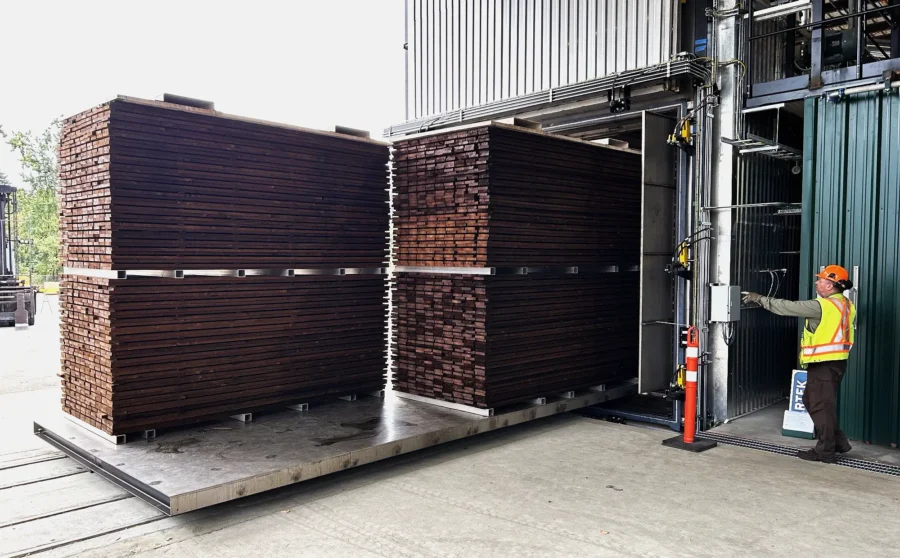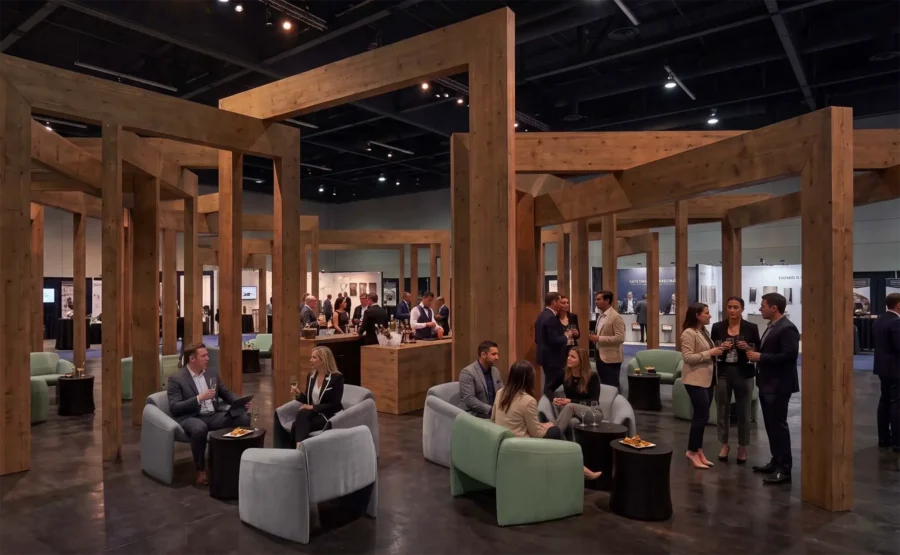
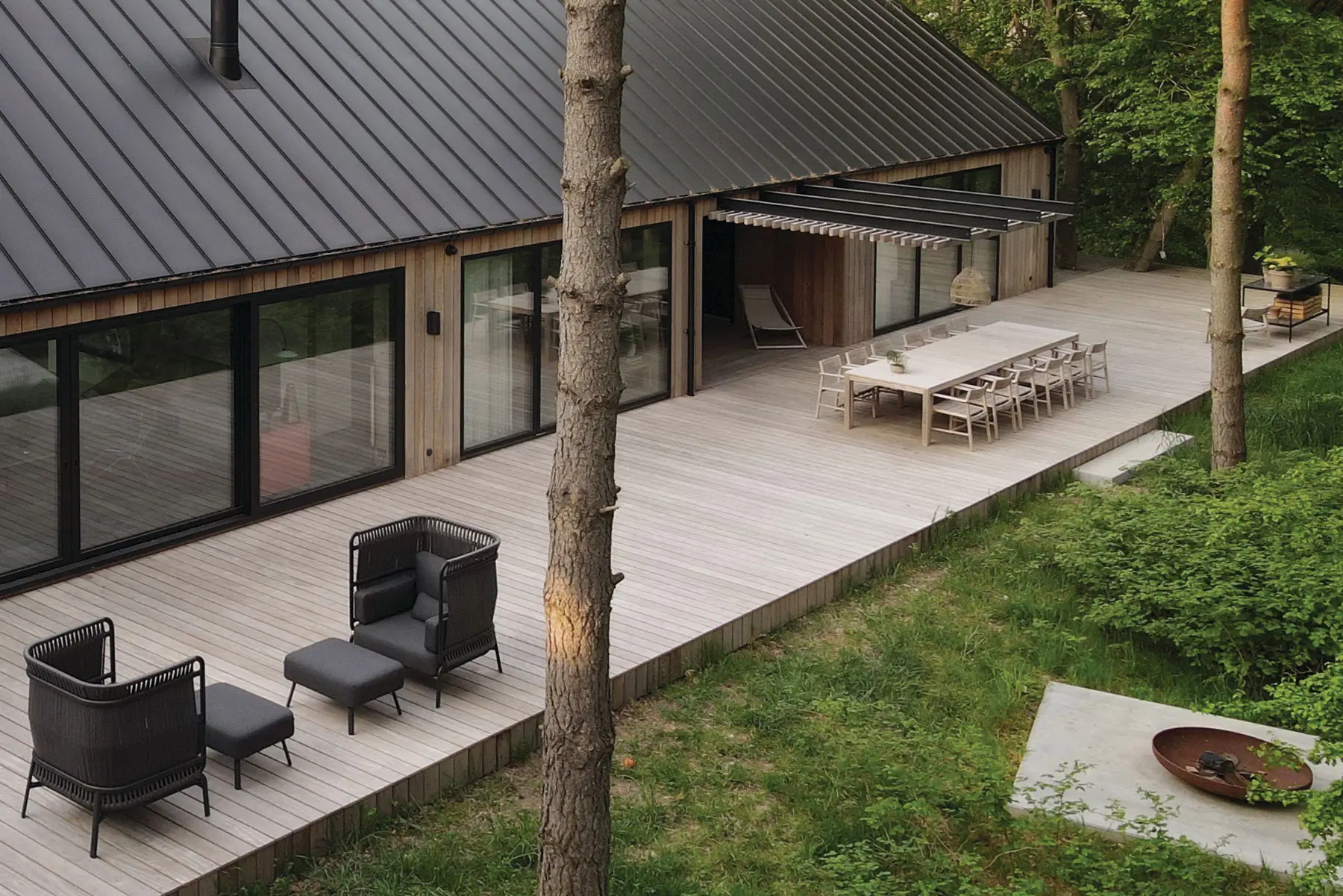
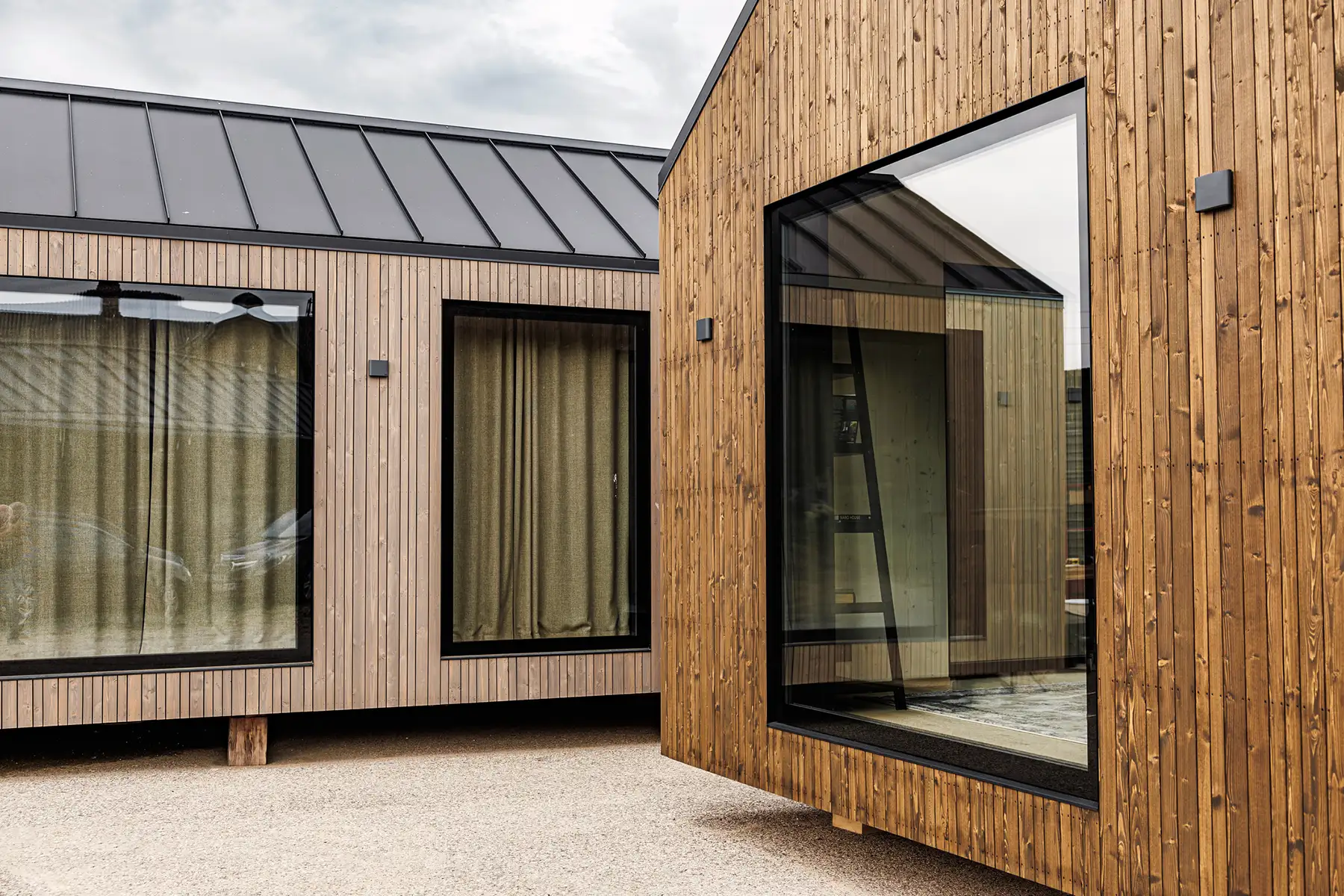
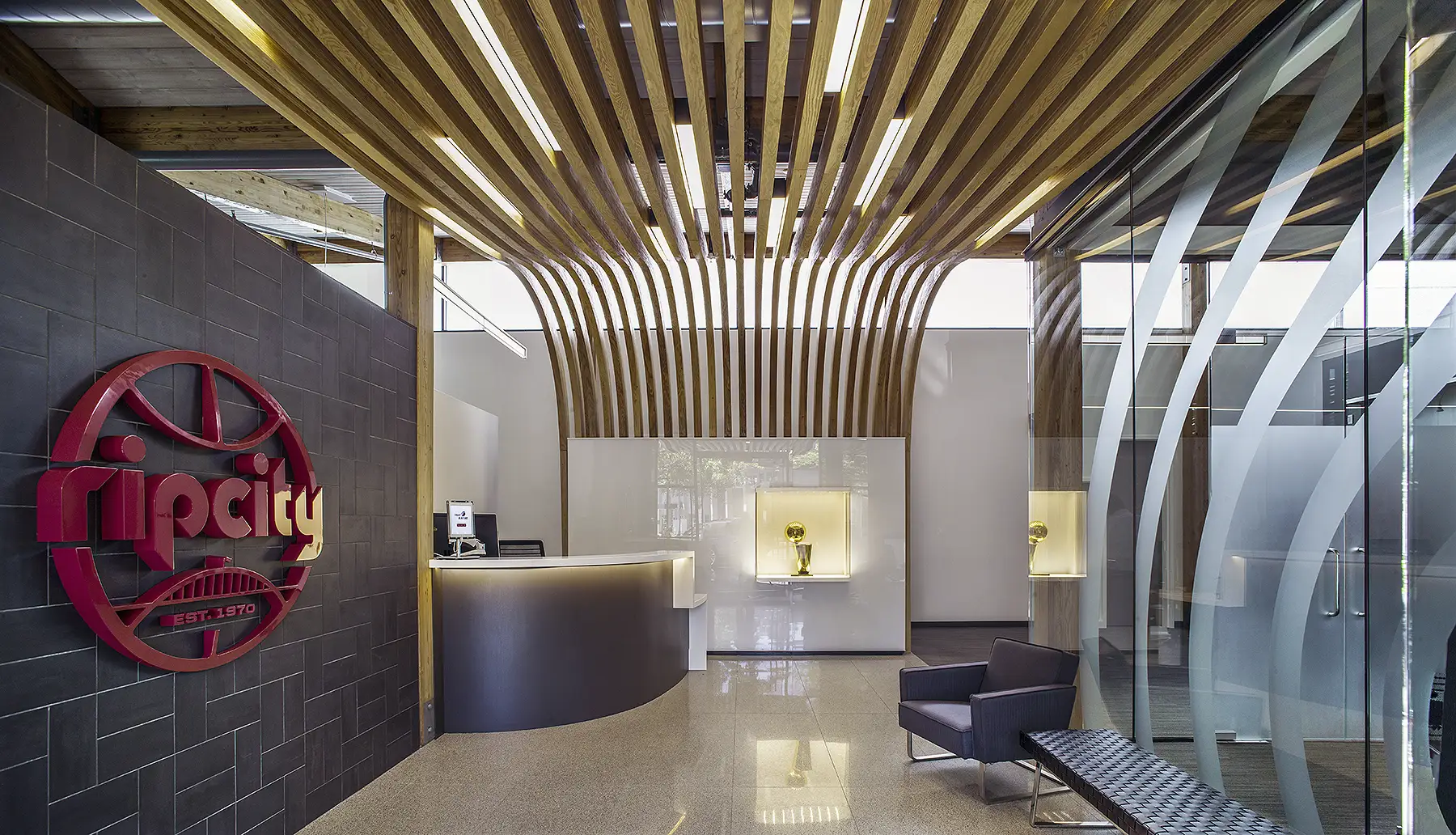
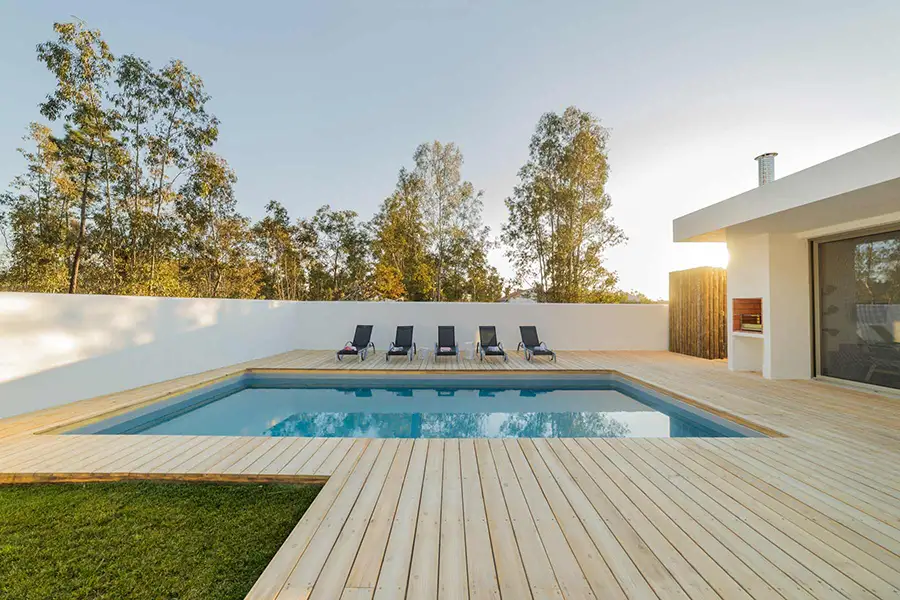
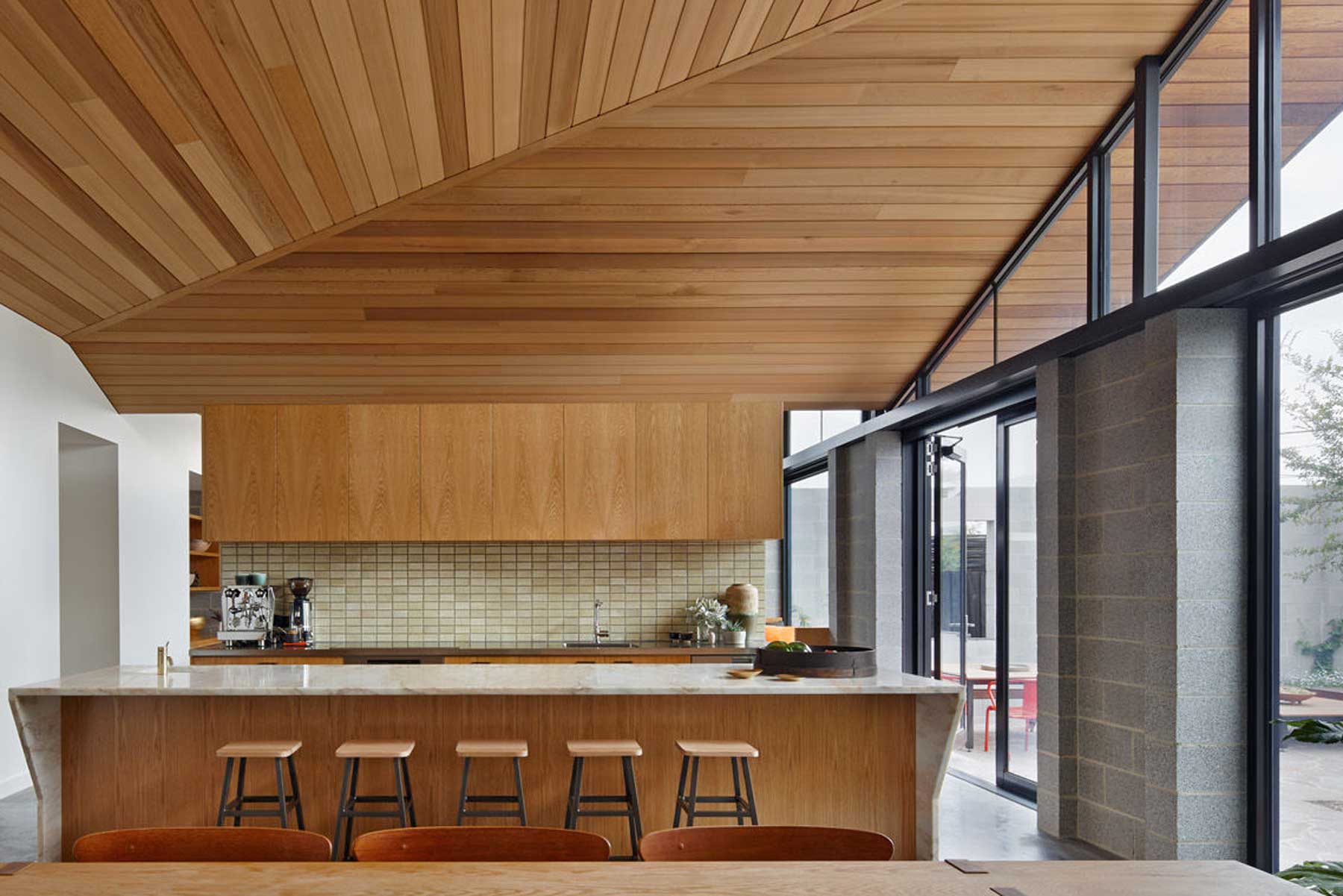
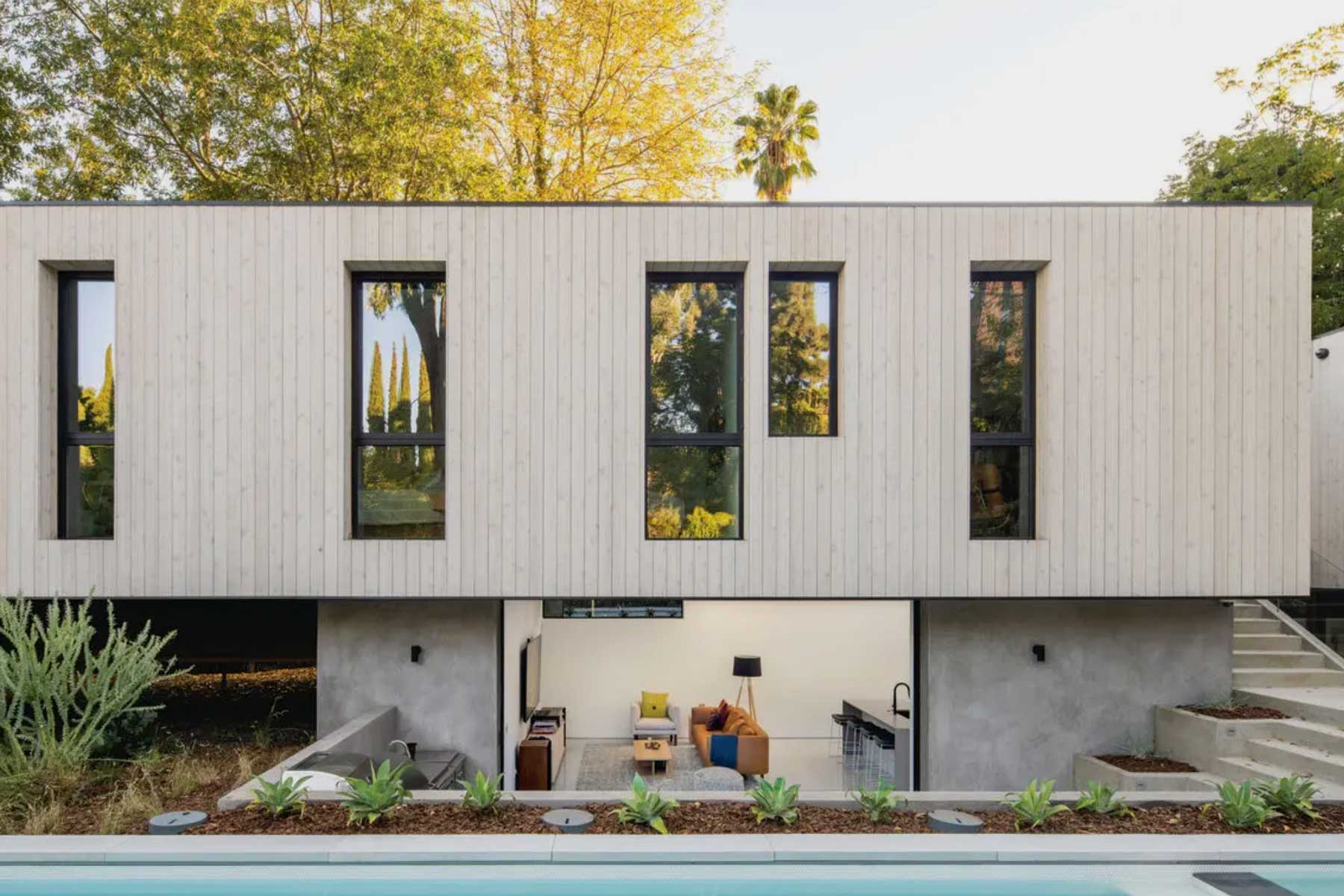
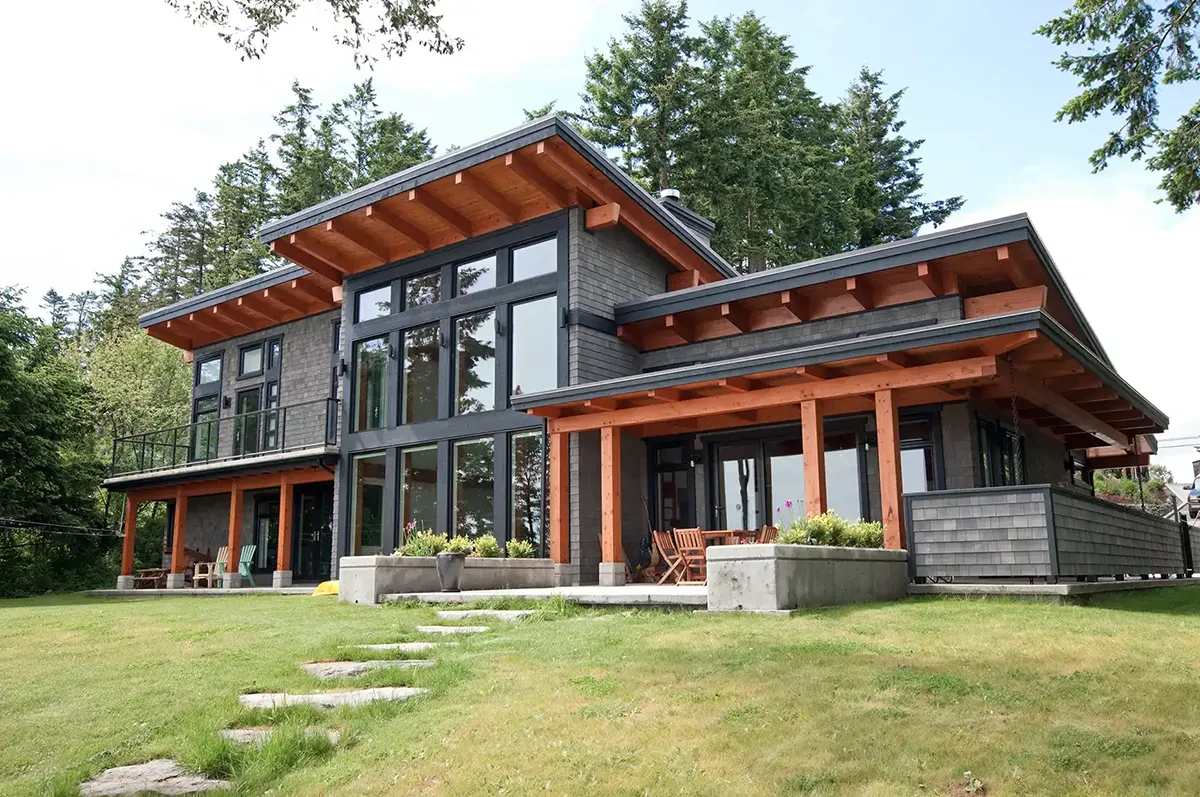
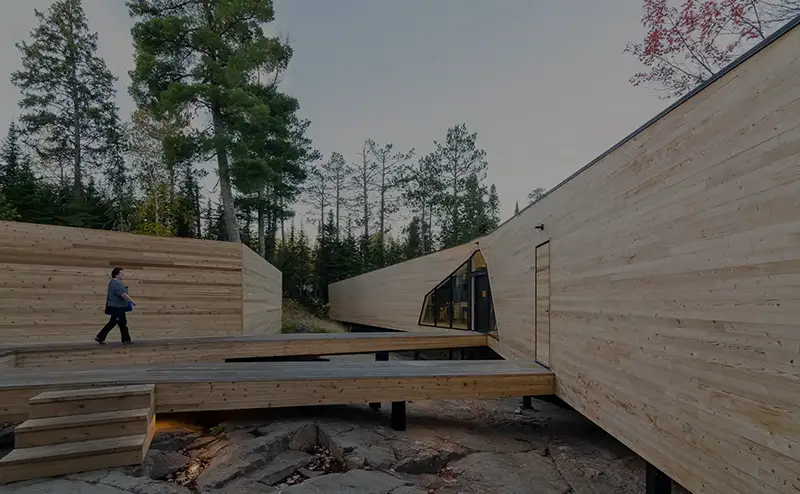

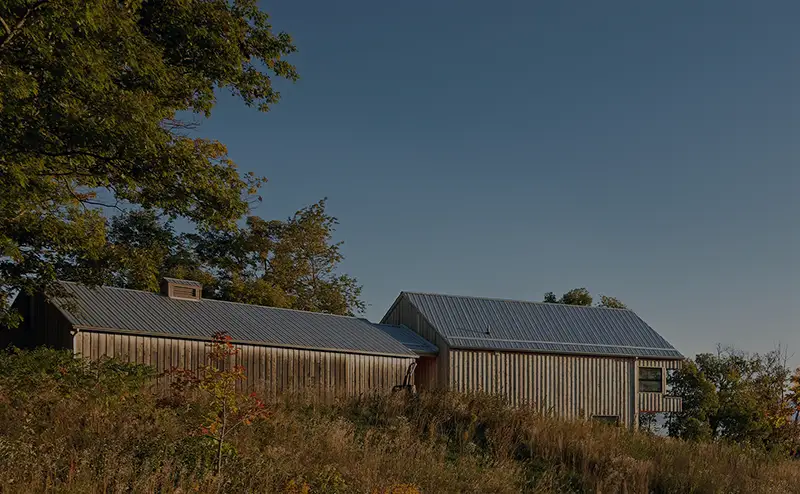
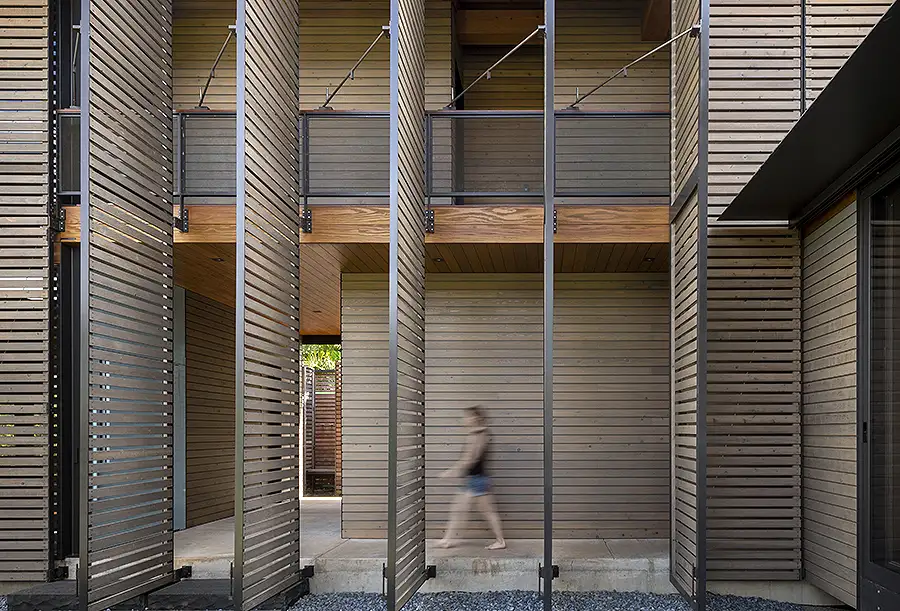
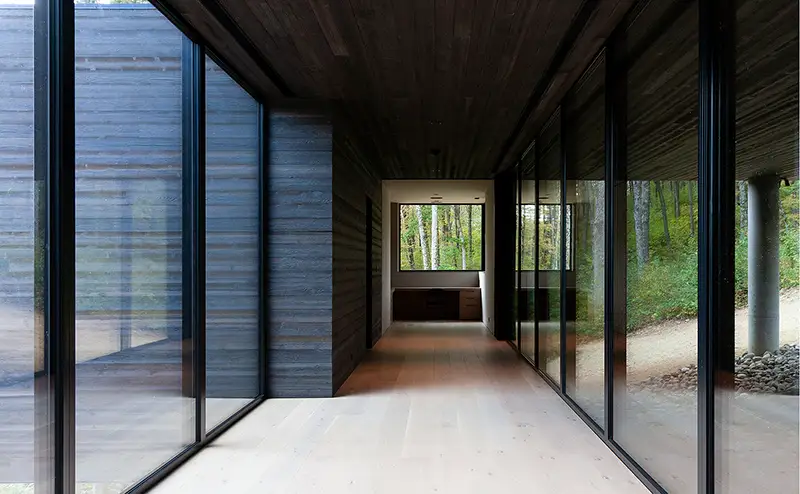
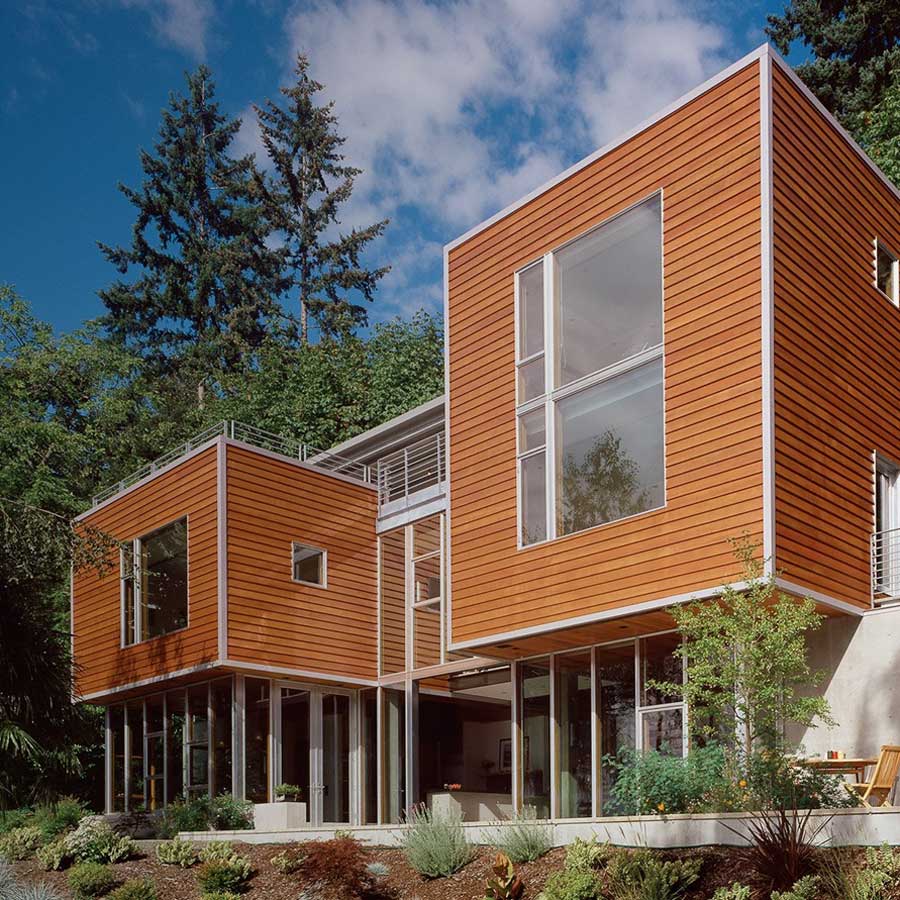


The benefits of thermally modified wood are incredibly practical, especially for exterior construction. Let’s look at the main benefits of thermally modified wood when compared to other species and synthetics.
Dimensional stability, improved decay resistance, and stunning aesthetics.
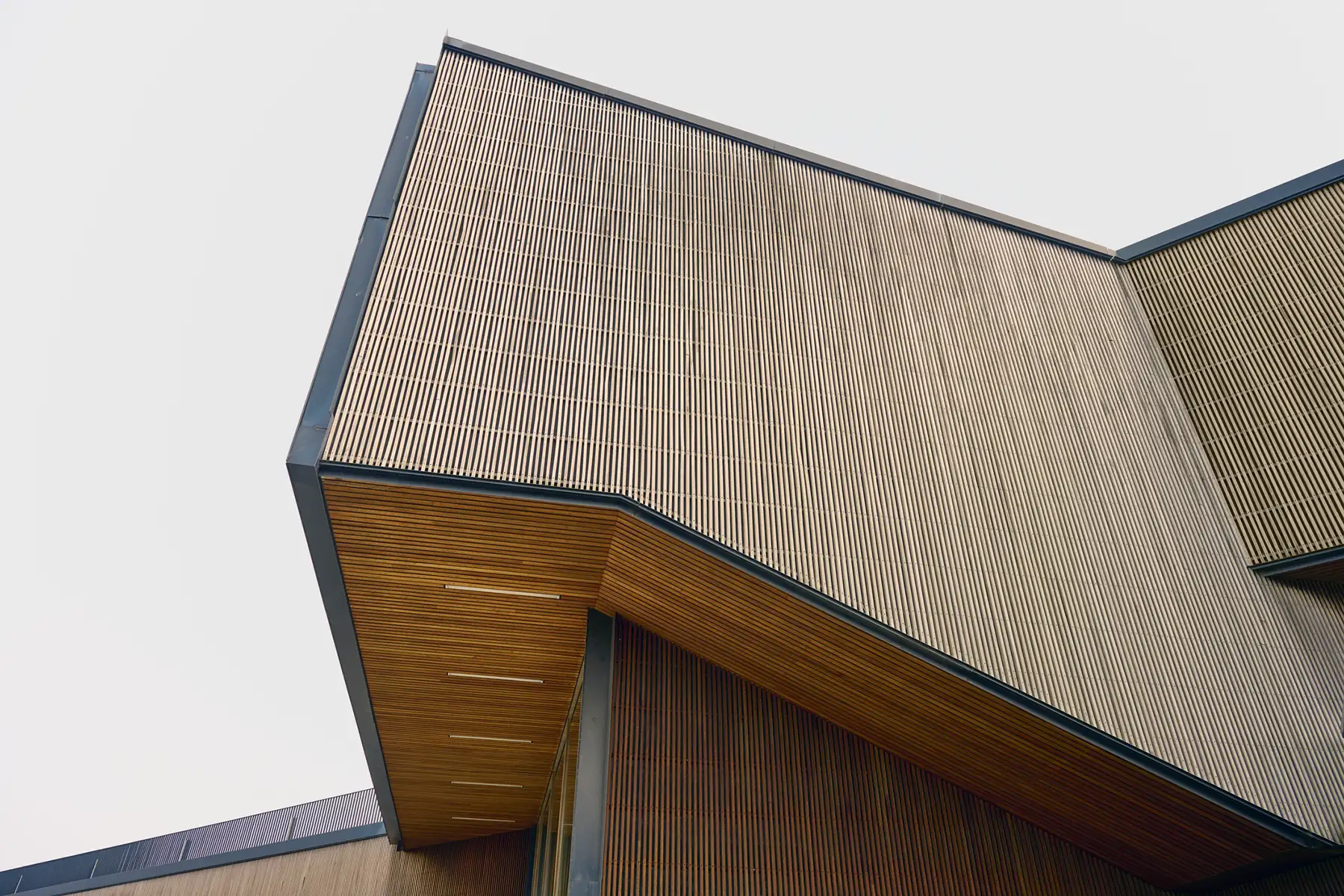
Hem-Fir thermal modification advantages are incredibly practical, especially for exterior construction. Dimensional stability is one of the key benefits of thermally modified wood, because reduced moisture absorption makes it less prone to swelling, shrinking, warping, and cupping. That matters for exterior wood siding, thermally modified wood decking, cladding, fascia, soffits, and trim, where movement can affect appearance, installation, long-term performance, and maintenance.

The second is improved decay resistance. Thermal modification reduces the sugars and other compounds that decay organisms feed on. The wood is not indestructible, and it is not typically suitable for ground-contact use, but it becomes far better suited to many above-ground exterior applications when properly detailed, installed, and maintained.

The third is a chemical-free modification process. The ITWA describes the process as using high temperature and steam, without added chemicals. It also notes that because the process is based on high temperature and steam, harmful substances do not leach into the ground from the finished products.
The fourth is appearance. Thermal modification darkens wood, creating a warm, rich tone that can feel more premium and contemporary than many conventional softwoods. Depending on species, temperature, finish, and exposure, the appearance can resemble cedar or some tropical hardwoods. Left unfinished, thermally modified wood will still weather and silver over time, which can be an attractive design outcome when planned properly.
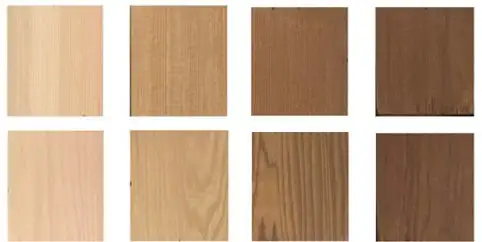
Nourian, S. (2018). Thermal modification of Western Hemlock (Tsuga heterophylla). Master’s thesis, The University of British Columbia
The fifth is product value. Thermal modification can upgrade species that may otherwise be used primarily in structural or lower-value applications, creating higher-value appearance products for construction and design.
‘Thermally modified wood has incredibly useful properties that extend the lifespan of the material, contribute to better economics, and seriously elevate aesthetics.’
– Western Forest Products
How thermally modified Hem-Fir compares to cedar and synthetic alternatives.
Western Red Cedar remains a valuable, beautiful, and important species. It has earned its place in exterior wood applications over generations.
Thermally modified Hem-Fir is not a cedar imitation. It is a complementary Pacific Northwest wood platform that can offer many of the attributes architects, builders, and homeowners value in premium exterior products, including warmth, natural beauty, dimensional stability, and weathering character.
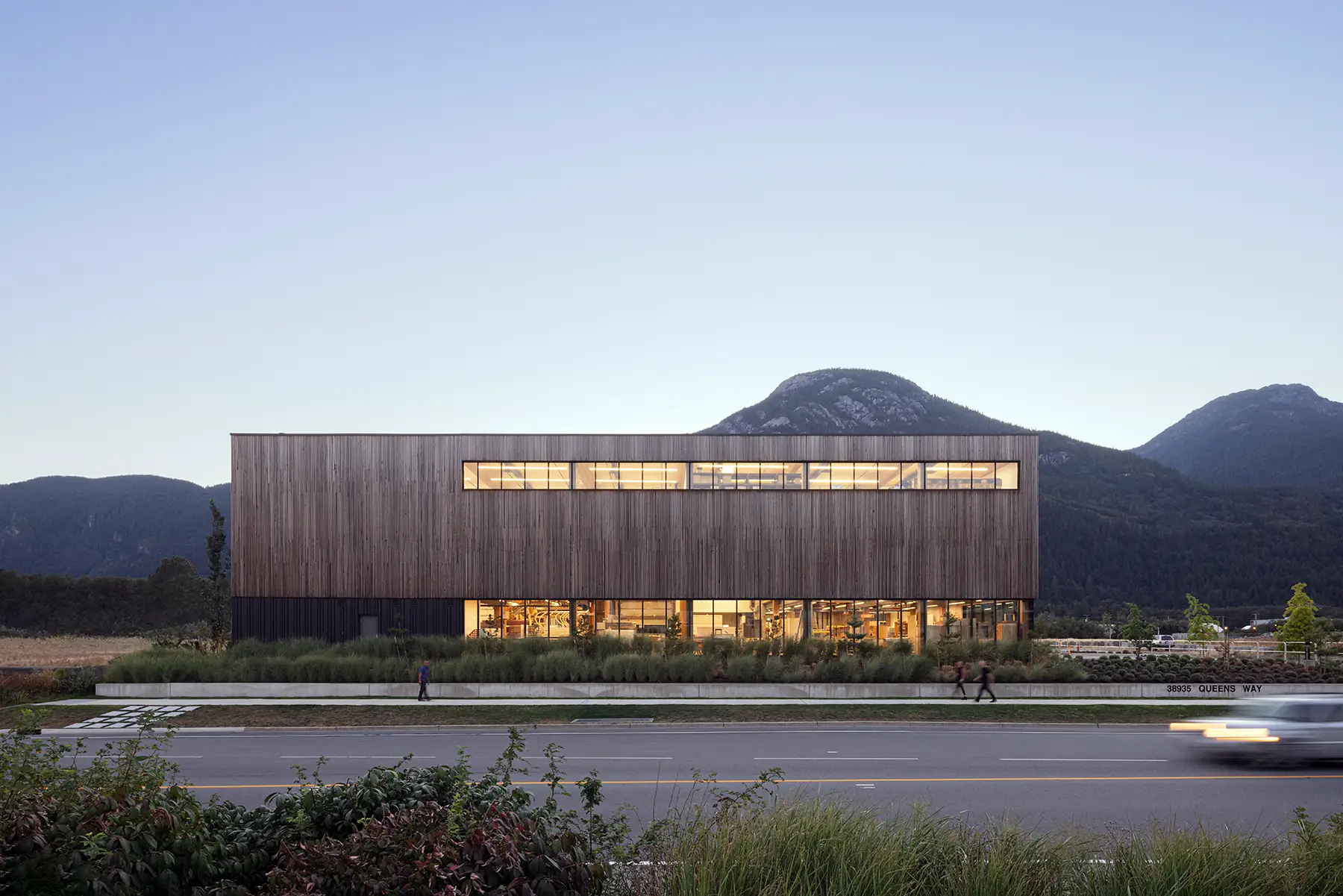
Compared with synthetic alternatives, thermally modified Hem-Fir offers a real-wood aesthetic, natural grain, strong finishing potential, and a sustainability footprint that synthetics cannot match. Synthetic decking and siding products can perform well in certain applications, but they are not natural wood. They often rely on plastics, binders, mineral components, or composite formulations, and they cannot fully replicate the character, tactility, workability, or ageing behaviour of real wood.
Hem-Fir thermal modification advantages also give builders and architects a product that aligns with rising interest in natural materials, low-chemical building products, regional supply, and sustainable wood construction. The International ThermoWood® Association notes that thermal modification increases wood durability and service life in many end uses, while using only high temperature and steam, without harmful substances leaching from the product.
‘Thermally modified Hem-Fir is durable enough to last. Stable enough to support better exterior performance. Attractive enough for a premium design. Sustainable enough to be responsible. And, local enough to support a Pacific Northwest value proposition.’
– Western Forest Products
From heat treatment to high-value wood products.
Thermally modified Hem-Fir is a premium Pacific Northwest product that’s underpinned by local fibre, vertical integration, responsible sourcing, regional relevance, and technical credibility. We’re not simply adding another SKU. We are using wood science to align our product strategy with the forest we are growing, the fibre we can supply, and the needs of architects, builders, distributors, and homeowners.
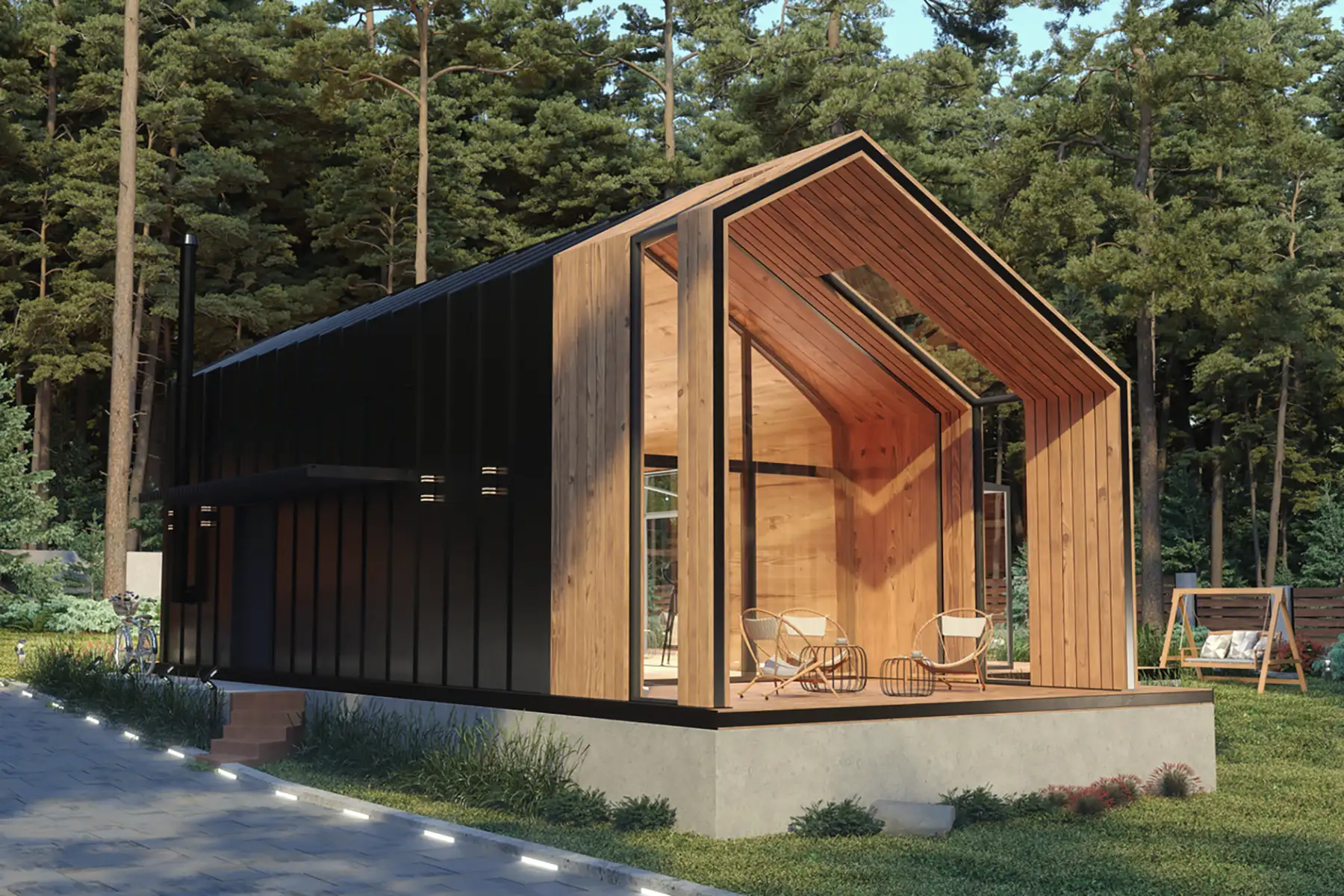
The end product has both functional and aesthetic appeal. It is stable, durable, workable, warm, natural, and design-forward. It can be used in exterior wood siding, thermally modified wood decking, cladding, fascia, soffits, trim, and other architectural applications where performance and appearance both matter.
‘The future of forestry will not be built by wishing for yesterday’s fibre basket. It will be built by creating better products from the fibre our forests are ready to provide.’
– Western Forest Products