






Thermal modification changes wood in useful ways, but it also changes wood in several ways at once. That is why testing is not a supporting activity. It is the foundation for responsible commercialization.
Testing thermally modified wood: From process to proven performance.
The thermal modification process uses heat and steam in a controlled, low-oxygen environment to alter the internal chemistry of wood. As hemicellulose is reduced and the cell wall becomes less able to attract moisture, thermally modified wood generally absorbs less water, moves less with seasonal humidity, and gains improved resistance to decay. Research reviews consistently identify improved dimensional stability, better biological durability, and reduced moisture uptake as core benefits of thermal modification. They also identify trade-offs, including possible reductions in some mechanical properties if treatment intensity is not properly controlled.
Thermal modification improves wood, but it does not remove the need for evidence. Species, grade, board thickness, initial moisture content, density, knots, treatment temperature, and time all influence performance. A product intended for siding, decking, cladding, soffits, fascia, trim, or architectural applications must be tested as a complete material system, not judged by assumptions drawn from untreated lumber.
‘Testing is how we turn a promising material into a product the market can specify with confidence.’
– Ara Koh, Market Intelligence Manager, Western Forest Products
Thermally modified wood testing starts with the species.
Best practice begins with the raw material. Every species responds differently to thermal modification. Jartek states that it often works with wood species that are common to customers but new to Jartek, with the goal of mapping their properties and understanding their feasibility as thermally modified products. Jartek systems are configurable, allowing process parameters to be adapted to specific fibre characteristics rather than relying on a fixed treatment schedule.
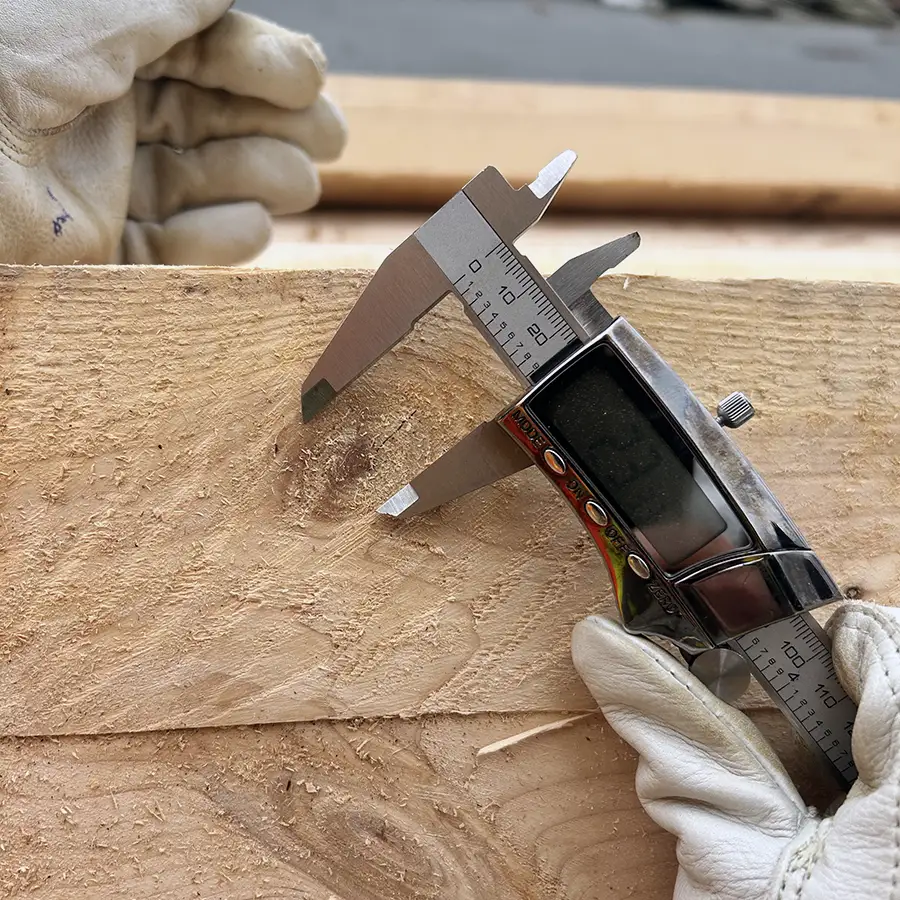
Hem-Fir is familiar to our forests and manufacturing system, but it still needs species-specific validation when modified with heat and steam. Western Hem- Fir varies naturally in density, moisture behaviour, knot profile, and grain characteristics. Those variables can influence drying, heat transfer, final colour, strength retention, machining, coating performance, and installation behaviour after thermal modification.
The first stage of testing should therefore characterize the feedstock before it enters the modification kiln. That includes:
- Species mix and grade profile
- Knot size, frequency, and distribution
- Moisture content
- Biological defects
- Board dimensions
- Grain orientation
- Baseline colour and appearance
Without that baseline, it is impossible to know what the process has improved, what it has changed, and where product limits should be set.
Process trials connect heat, steam, and performance.
The Thermowood® process is one of the most established thermal modification systems in the world. The International Thermowood® Association defines it as an industrial-scale process where wood is modified at elevated temperature, in the presence of steam, under atmospheric pressure, and without added chemicals. Thermowood® production is monitored through an audited quality control system with independent third-party inspections.
That quality framework matters because thermal modification is not just about reaching a target temperature. It is about controlling the entire process. Final product performance depends on control of the entire treatment process, including drying conditions, heat exposure, moisture management, steam conditions, airflow, and post-treatment conditioning. Each variable influences the resulting durability, dimensional stability, appearance, and mechanical performance of the final product.
For a new Hem-Fir platform, process trials should test different treatment schedules and identify the best balance between durability, dimensional stability, colour, strength retention, machinability, and yield. Treatment that is too mild may not deliver the target performance. Treatment that is too severe may increase brittleness, reduce strength, or create avoidable manufacturing loss.
Best practice is to treat process development as a controlled experiment, with each trial linked to measurable outcomes. That means documenting:
- Treatment temperature and duration
- Drying curve and conditioning schedule
- Moisture content before and after treatment
- Kiln load configuration
- Wood core temperature data
- Colour change through the cross-section
- Dimensional change after treatment
- Defect development, including checking, splitting, distortion, or knot behaviour
- Yield and grade recovery after treatment
‘The goal is not the most severe treatment. The goal is the right treatment for the species, application, and customer.’
– Sepideh Nourian, Product Developer, Western Forest Products
Laboratory testing proves the material properties.
Once promising treatment schedules are identified, laboratory testing should verify how the material performs against recognized standards. The objective is not to prove that thermally modified wood works in general. That is already well established. The objective is to prove how Western’s thermally modified Hem-Fir performs.
The validation framework begins with material property verification, where key characteristics such as moisture response, dimensional stability, density change, and mechanical performance are measured. These results establish a baseline understanding of how Hem-Fir responds to thermal modification under controlled conditions.
Laboratory testing is supported by collaboration with external research institutions and independent testing laboratories, ensuring that results are generated using standardized methods aligned with established durability and performance evaluation protocols.
Production-scale validation closes the gap between lab and mill.
Laboratory results are essential, but they are not enough on their own. A small sample does not always behave like a full industrial kiln load.
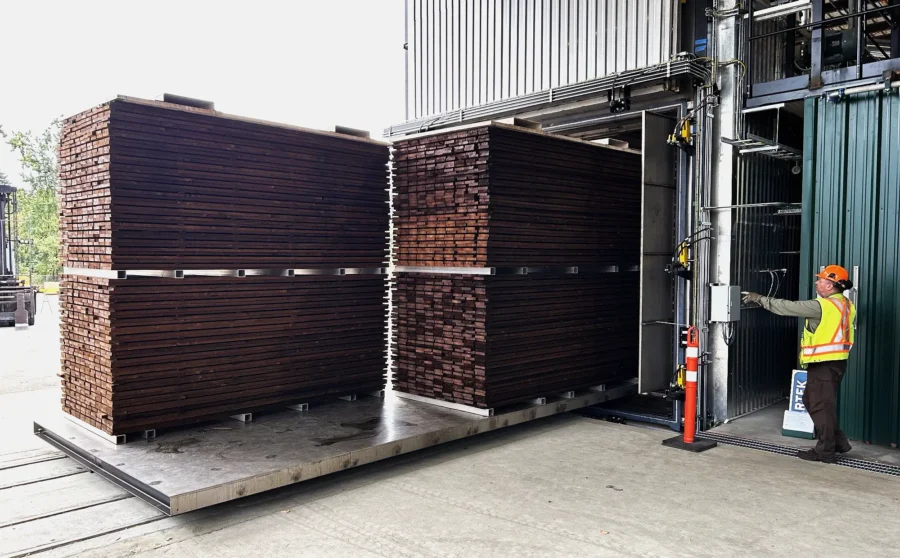
Production-scale validation confirms whether the process is repeatable under real manufacturing conditions. This includes full-load trials, normal material variation, actual stacking patterns, real airflow conditions, operational cycle times, and downstream handling. It also confirms whether the product can be produced consistently enough for commercial sale.
For thermally modified Hem-Fir, production validation should confirm that the material can be manufactured consistently at scale. This includes batch-to-batch consistency, core and shell treatment uniformity, colour consistency, post-treatment moisture range, dimensional accuracy, grade recovery, machining yield, and repeatability across kiln charges.
‘A good pilot proves the possibility. A good production trial proves repeatability.’
– Sepideh Nourian, Product Developer, Western Forest Products
Field testing shows how the product behaves in the real world.
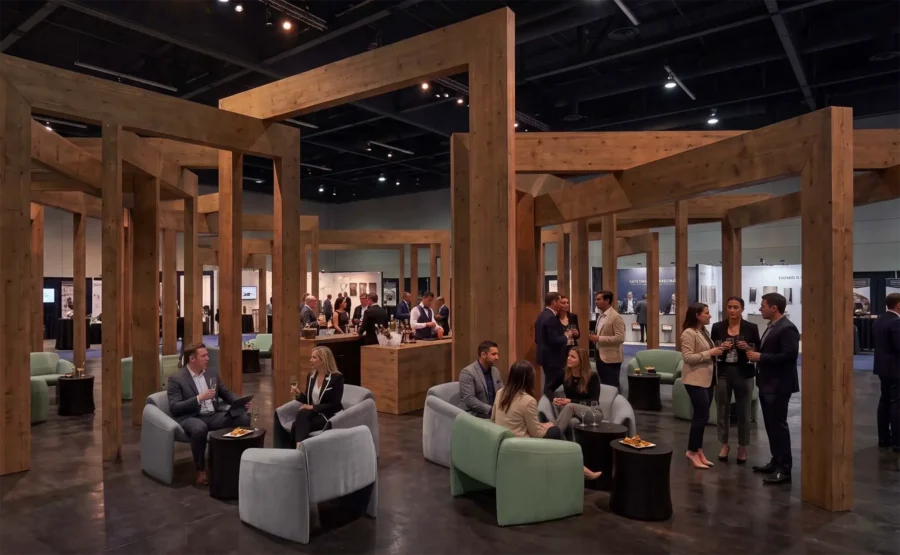
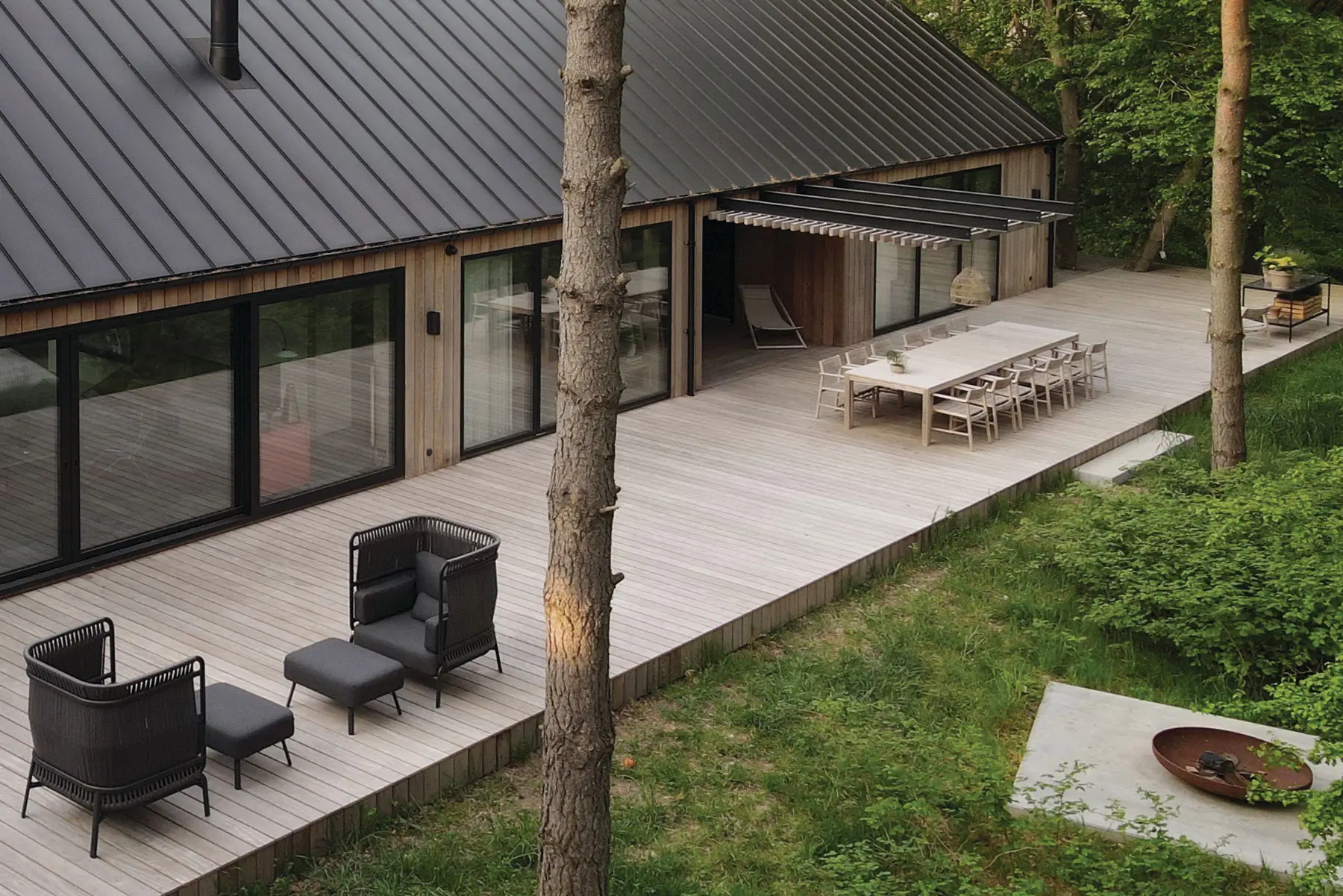
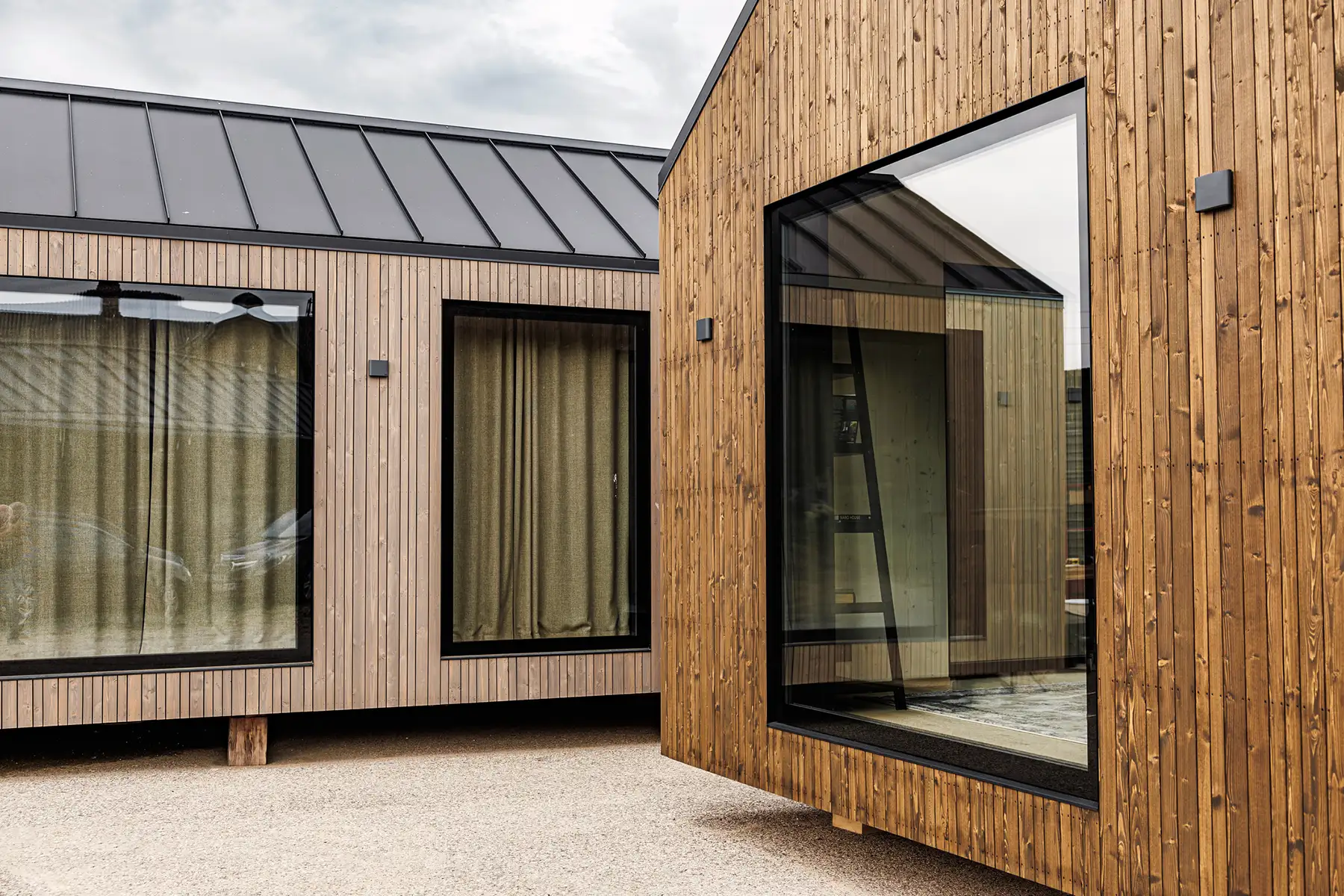
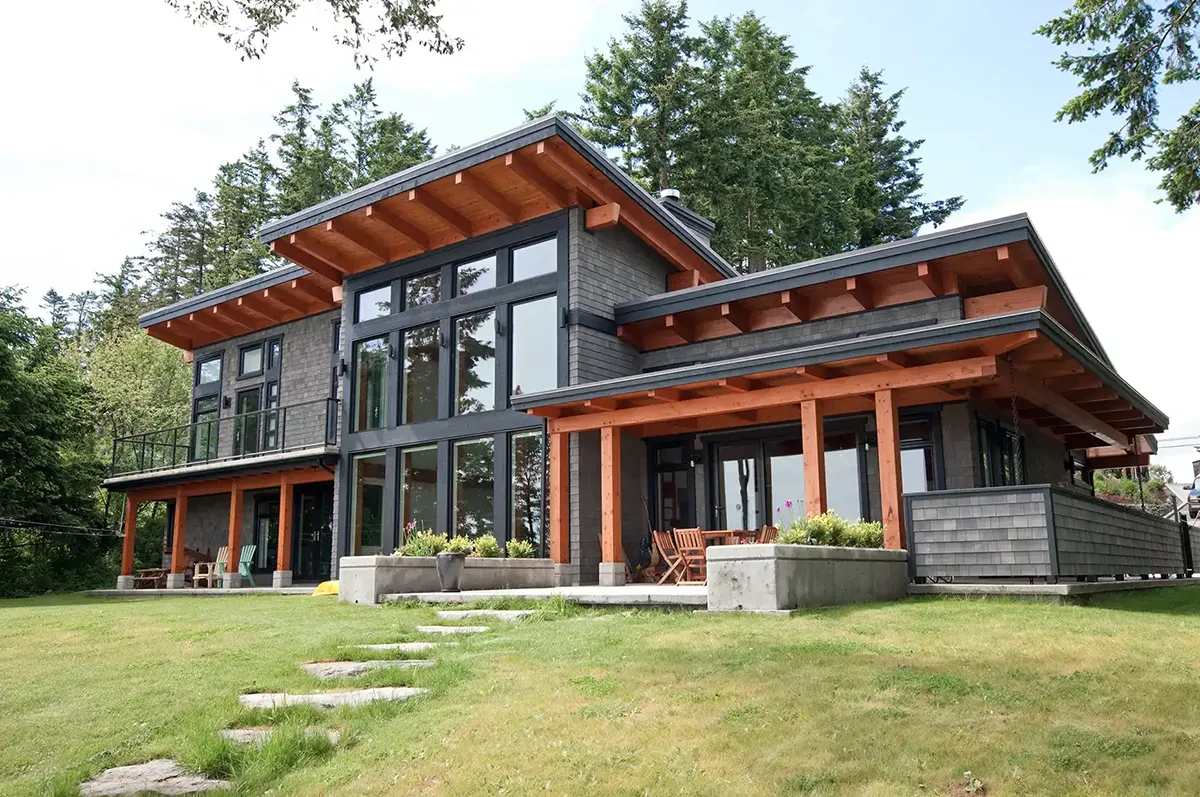
Field testing is where laboratory confidence meets real exposure. Thermally modified wood should be tested outdoors in applications that reflect intended use, including siding, decking, cladding, soffits, trim, fascia, and other architectural details. Installed samples should be monitored under rain, UV exposure, wind, seasonal humidity changes, freeze-thaw cycles where relevant, and normal construction practices.
These field trials also evaluate machining response, fastening behaviour, coating compatibility, installation tolerances, and visual ageing under natural exposure conditions. Findings are then used to refine process parameters, installation guidance, and finishing systems, closing the loop between controlled production and end-use performance.
Value-added partners are also engaged during this phase to evaluate coating and surface system compatibility, as thermally modified wood exhibits altered surface chemistry compared to untreated material.
Specification documents should evolve with the data.
Best practice is to begin specification development early and keep it transparent. Data sheets, installation guides, finishing recommendations, maintenance guidance, and application notes should be living documents during pilot development.
The first versions should clearly identify what is known, what is being tested, and which applications are currently recommended. As testing expands, the documents should be updated with validated performance ranges, installation details, fastener guidance, coating systems, profile recommendations, and use limitations.
This protects customers and strengthens credibility. It also helps architects, builders, distributors, and specifiers evaluate thermally modified Hem-Fir without guessing.
For Western, the objective is not accelerated adoption at any cost. The objective is controlled validation, clear documentation, and disciplined commercialization.
From tested material to a trusted wood platform.
The best testing programs connect four things: process, product, application, and market confidence. Thermal modification has a strong technical pedigree, but every species and product platform still needs its own evidence. For thermally modified Hem-Fir, the path to market should be built through baseline characterization, controlled process trials, laboratory testing, production-scale validation, field exposure, value-add partner feedback, and alignment with recognized frameworks such as ITWA.
This approach supports a stronger product and a stronger market launch. It proves where thermally modified Hem-Fir performs well. It identifies where guidance is required. It helps define appropriate claims. And it gives specifiers confidence that the product is being developed with rigour.
‘Our job is not simply to launch thermally modified Hem-Fir. Our job is to prove it, document it, and build it into a platform the market can rely on.’
– Sepideh Nourian, Product Developer, Western Forest Products