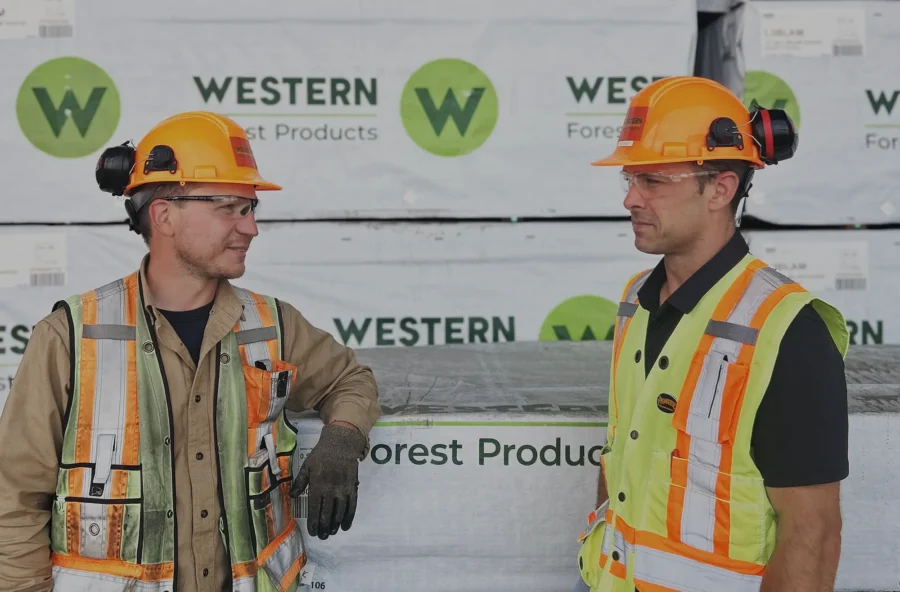
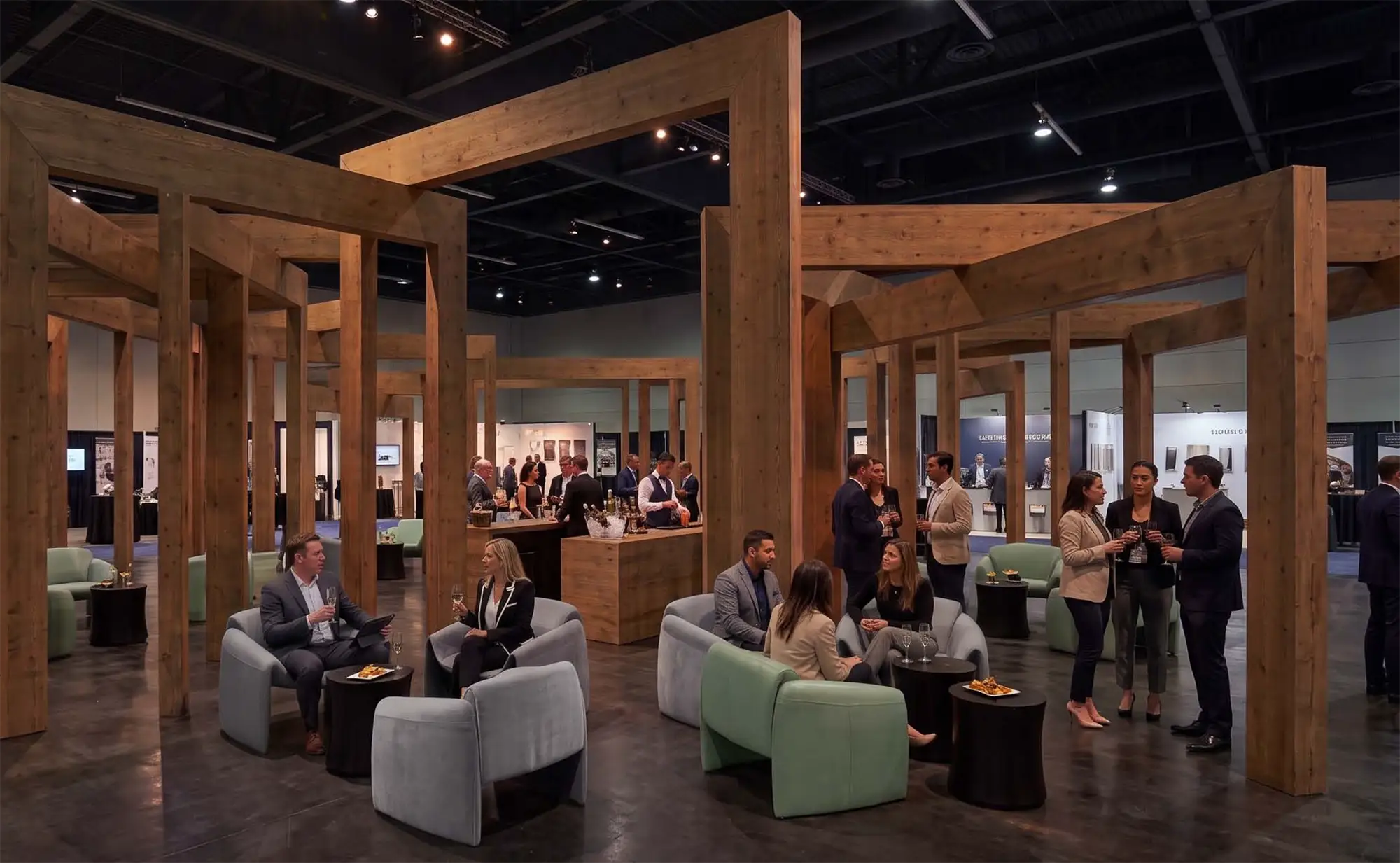
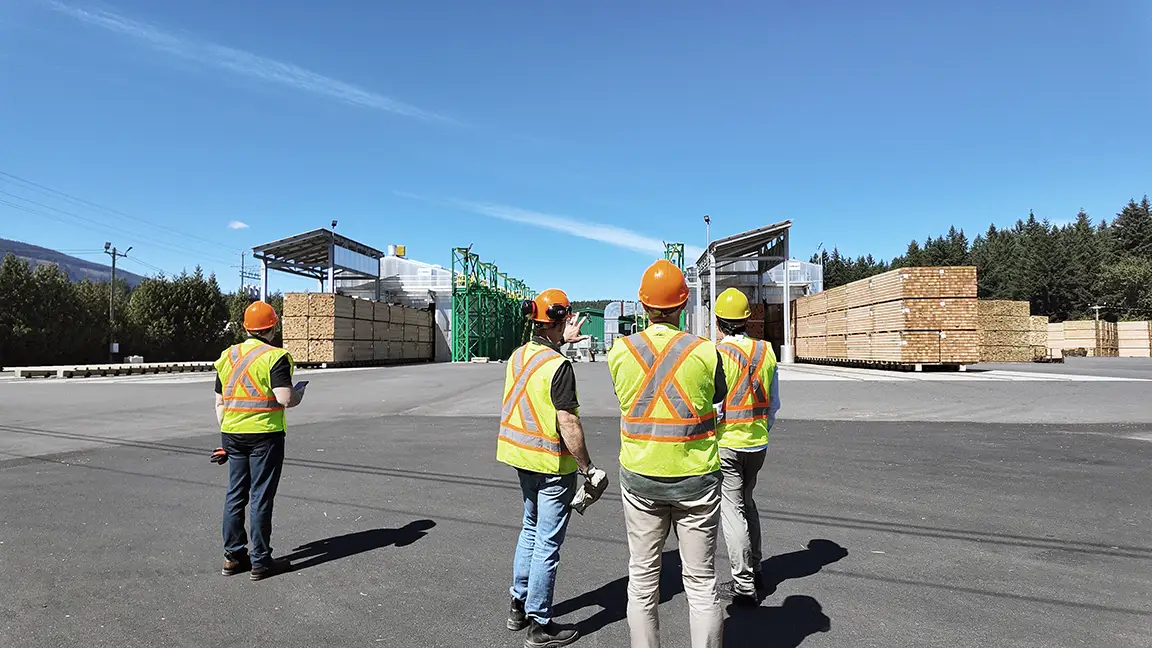
At IDS Vancouver, a local design firm reimagines the Central Bar each year. For 2026, Synthesis Design has created STILL/not still, a forest-inspired installation built with Western’s thermally modified Hem-Fir. To inform the concept, the Synthesis Design team joined Western’s Fibre to Future Island Tour, following the material from seedling and forest stewardship through manufacturing, thermal modification, and fabrication.
Watch the making of the STILL/not still installation at IDS Vancouver.
The Interior Design Show Vancouver is happening at the Vancouver Convention Centre from 24th to 27th September 2026.
For tickets and more information – click here.
From B.C. forestry to design: how thermally modified Hem-Fir became the material behind STILL/not still.
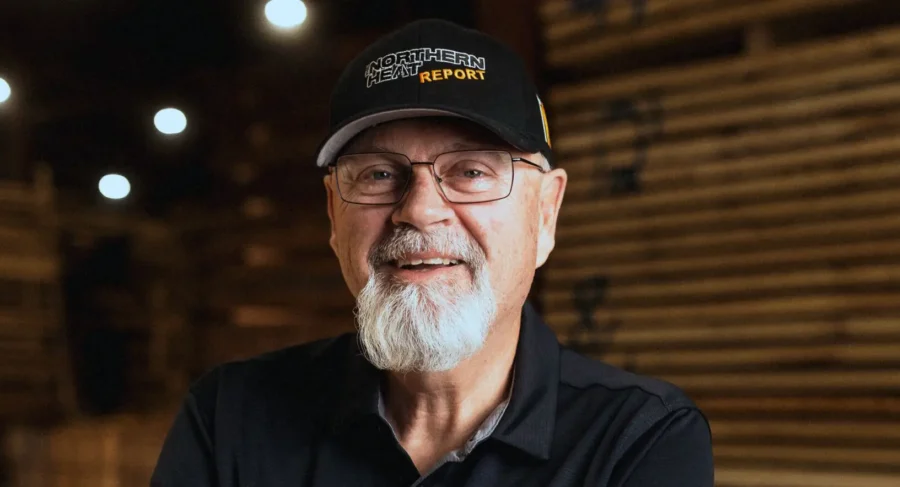
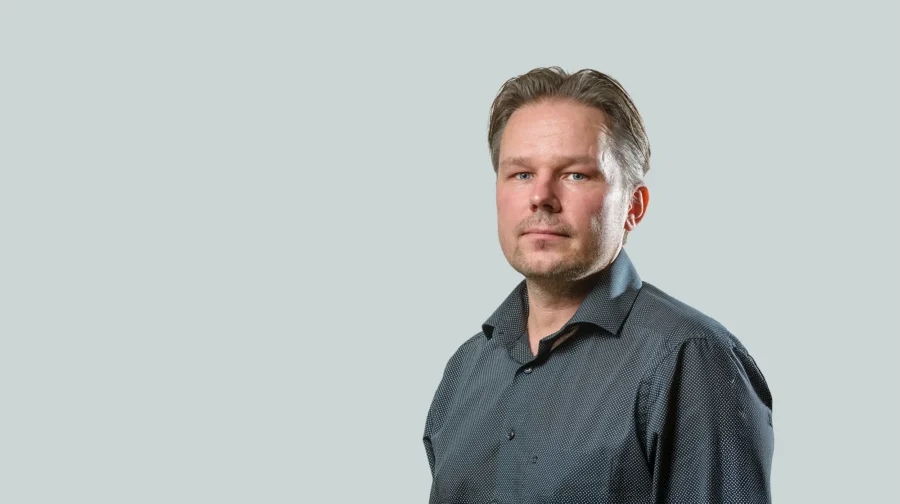
In this interview, Curtis Krahn, the founder and principal of Synthesis Design, shares the thinking behind the concept, the role of thermally modified wood for architecture, and why this B.C. wood innovation became central to the design.
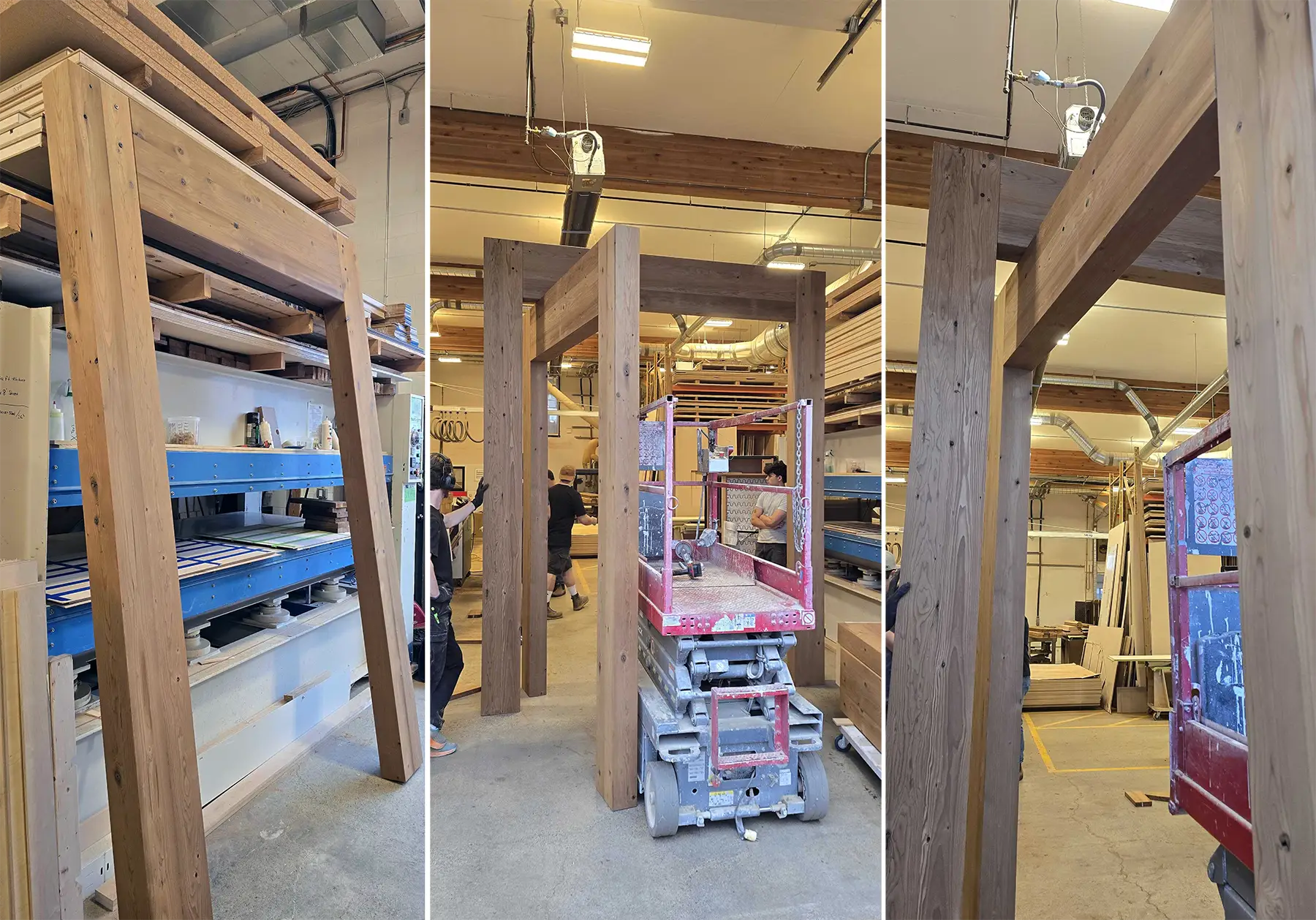
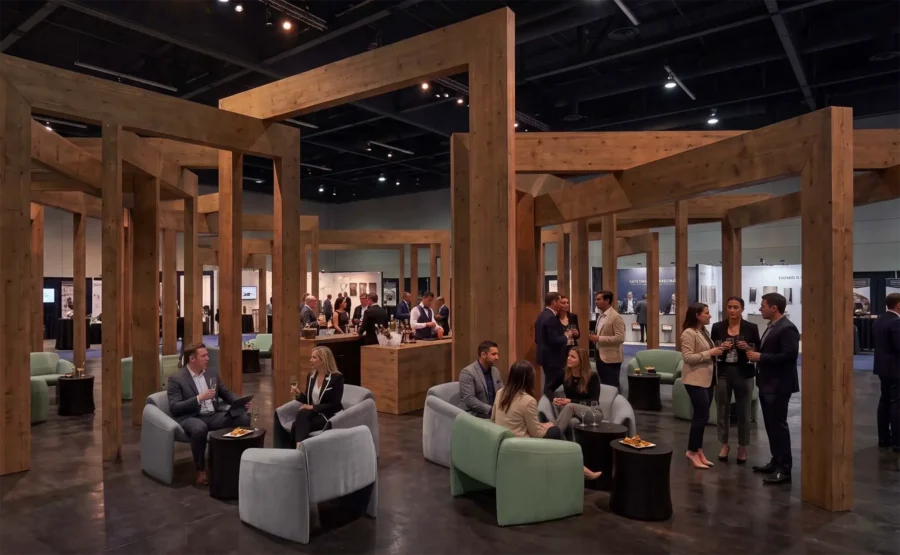
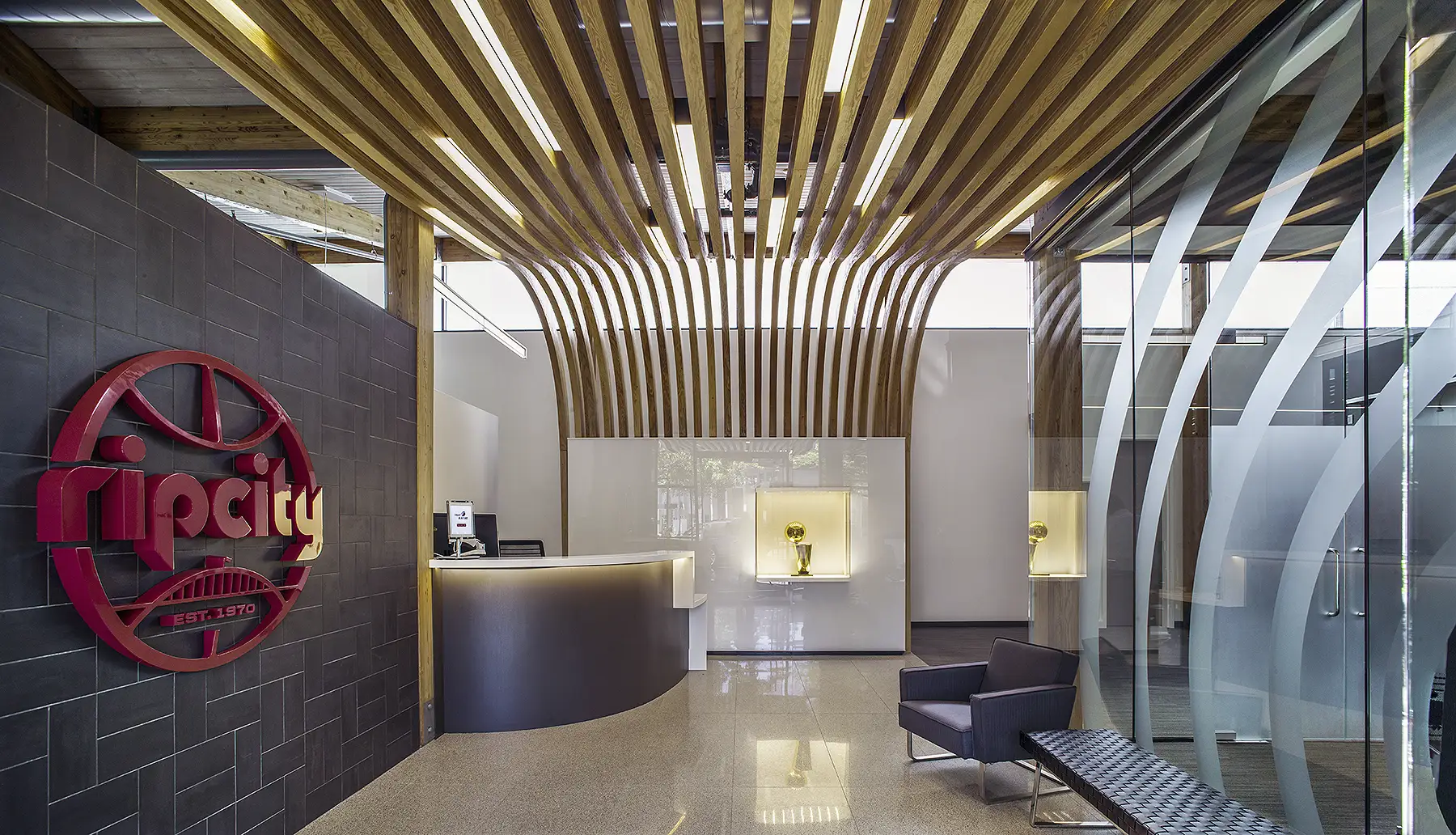
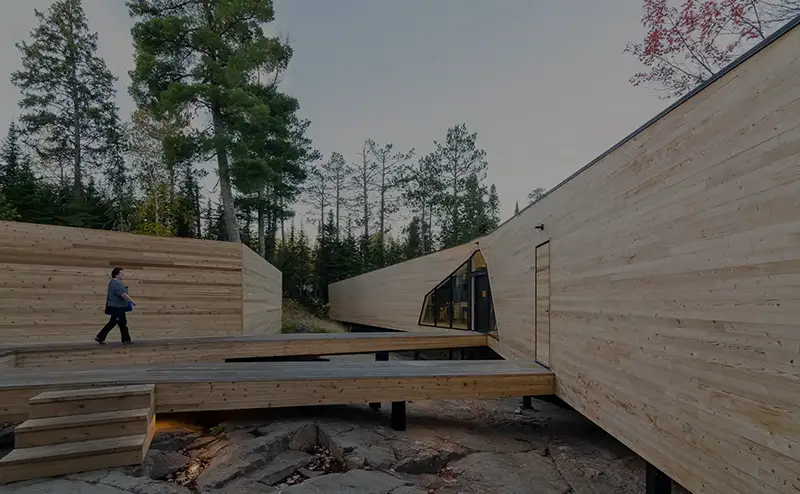
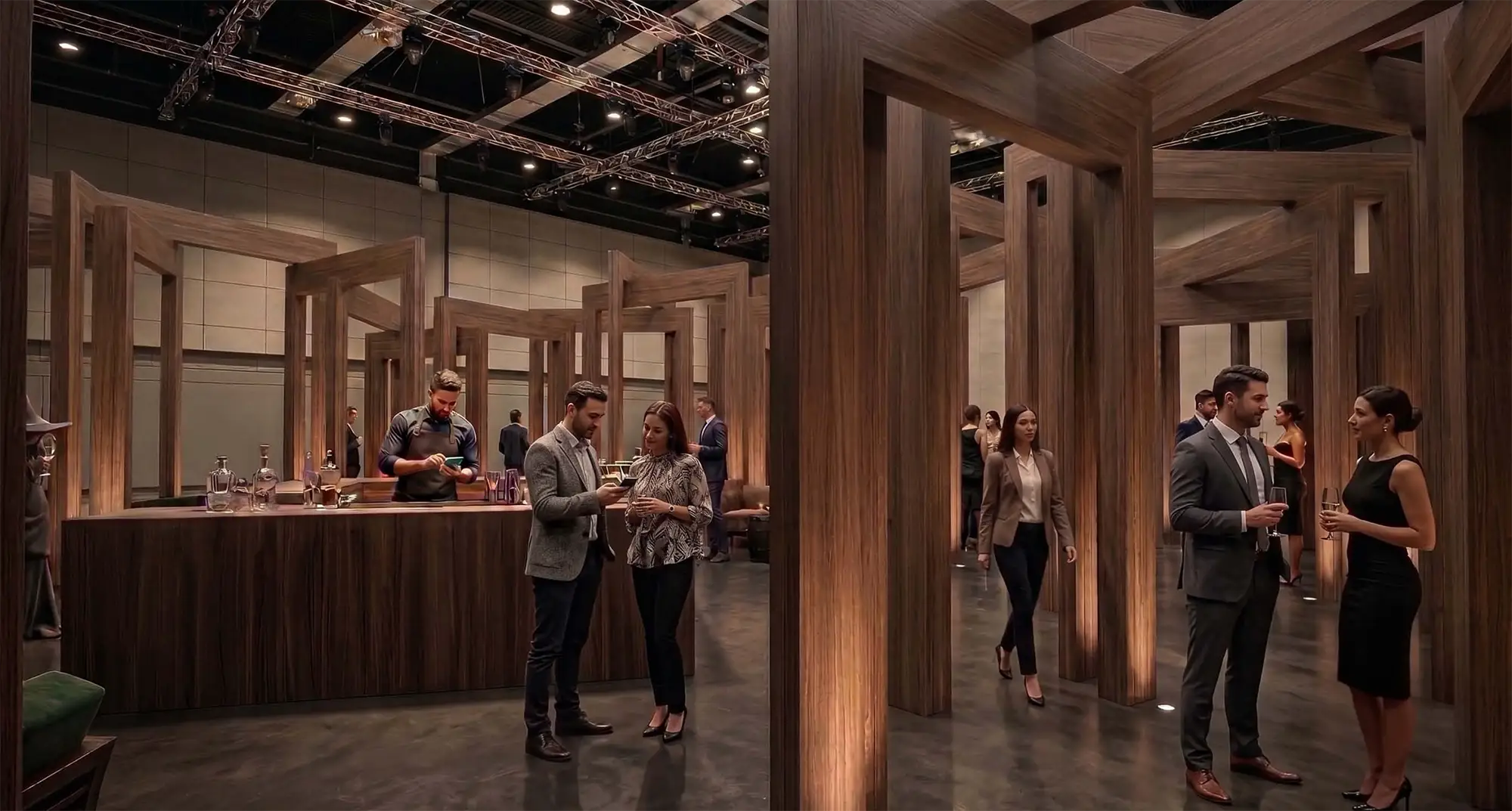
STILL/not still is designed as an immersive wood installation that invites visitors to move through the space rather than view it from a single fixed point. Its overlapping wood arches create a shifting sense of enclosure, rhythm, and openness, echoing the experience of walking through a coastal B.C. forest. Built with Western’s thermally modified Hem-Fir, the installation uses the material’s warmth, texture, and natural character to connect forestry, manufacturing, and contemporary design.
What was the idea behind the IDS Vancouver wood installation?
Curtis Krahn: STILL/not still is our modern take on the coastal forest and a study in thermally modified wood for design. The arches are arranged in a seemingly random way, nesting among each other and forming a continuous perimeter around the space.
Like a forest, there are no visible entry or exit points. Visitors can choose their own path. As they move through the installation, the space changes depending on their point of view, eventually opening into a clearing where people can pause and connect.
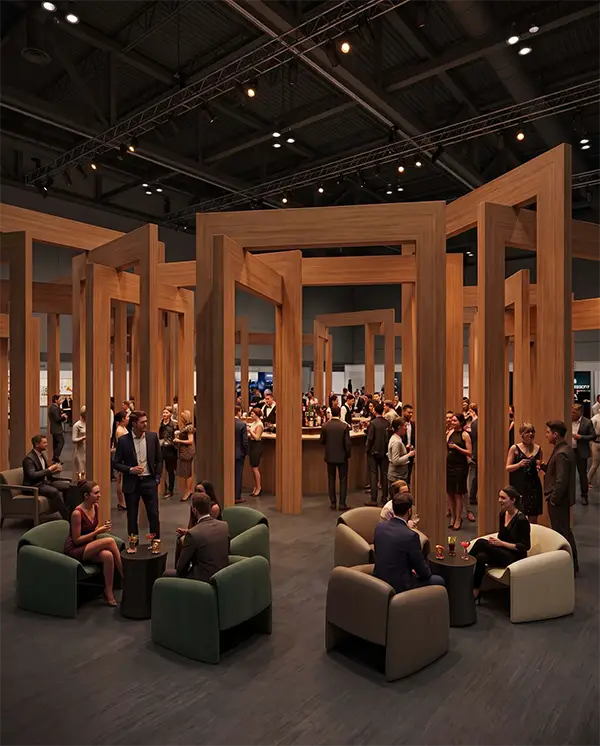
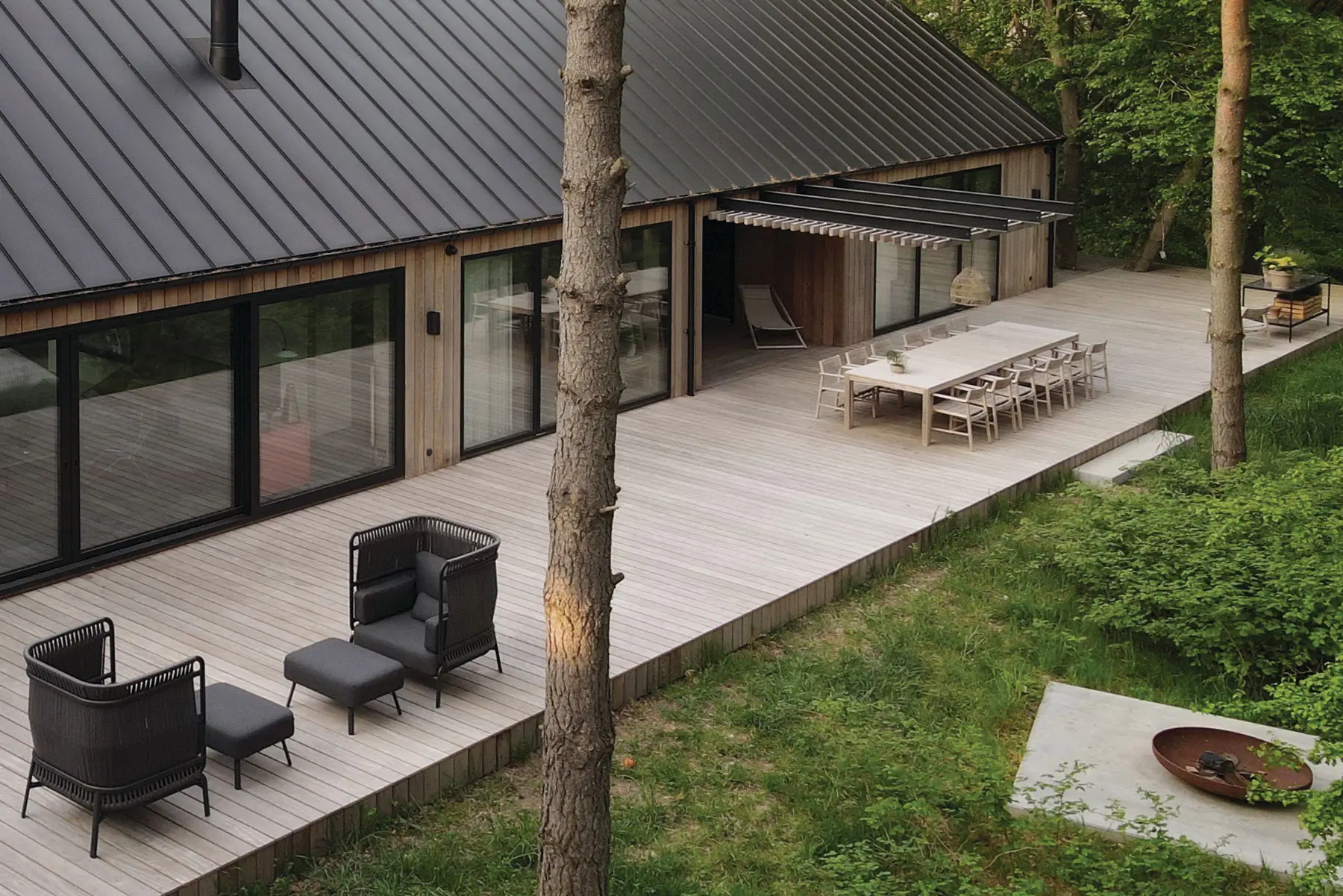
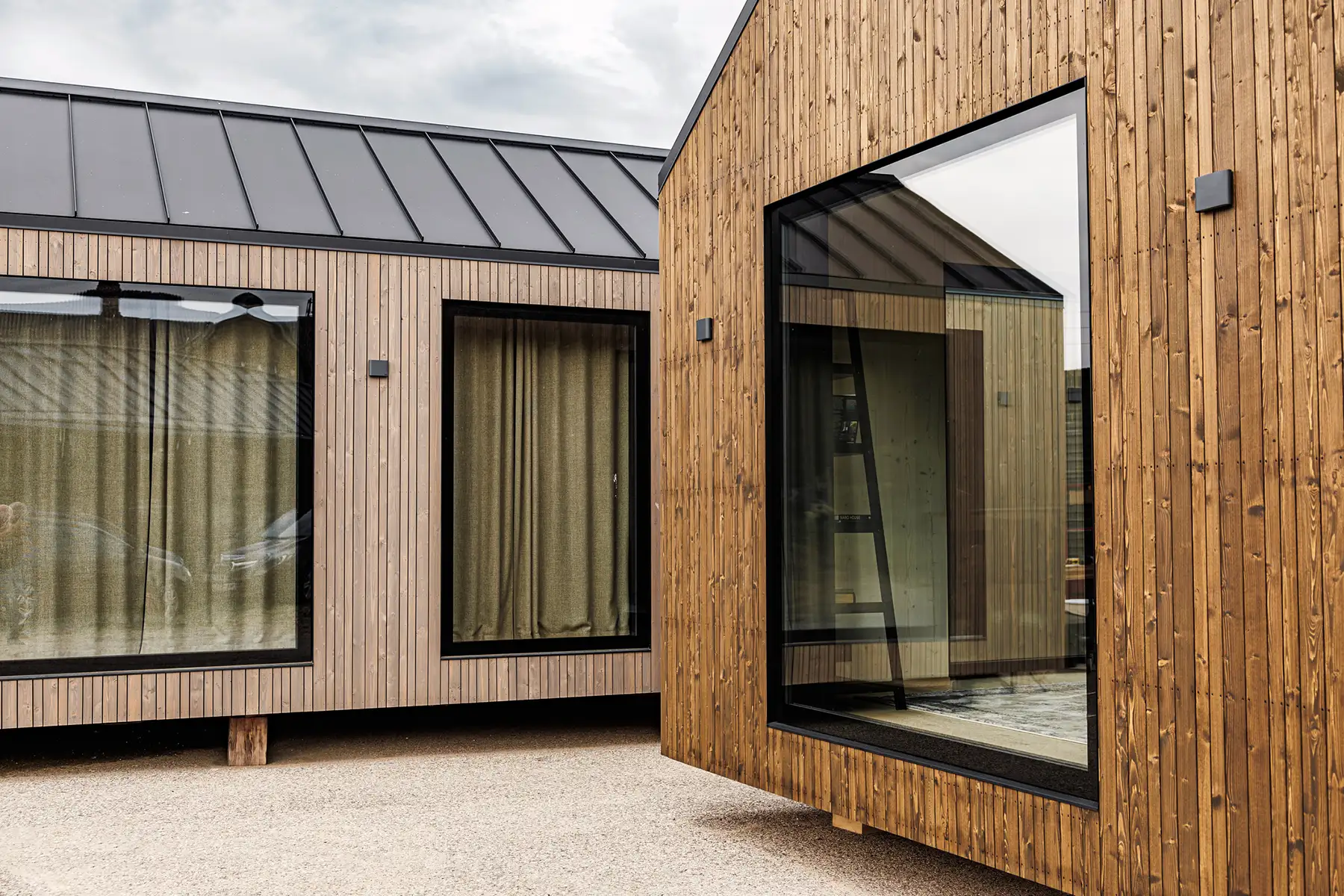
The installation also gives us an opportunity to explore how thermally modified Hem-Fir can move beyond a building material and become an immersive wood installation, showcasing the warmth, texture, rhythm, and natural beauty of wood at a meaningful scale.
How did thermally modified Hem-Fir become the material choice?
Curtis: As designers, we are constantly looking for materials that balance beauty, performance, and practicality. When we were asked to design the feature space at IDS Vancouver, we focused on innovation in B.C. wood. We initially looked at more obvious engineered wood products, including CLT, Parallam, Microllam, and LVL.
Then Western Forest Products introduced us to its thermally modified Hem-Fir and gave us a preview of what they were developing. The decision was made. It was exactly the kind of innovative local product we needed to support the design vision.
It gave us an opportunity to feature Hem-Fir in a unique way while exploring what we could create from a familiar coastal species.
Was the product development process part of the appeal?
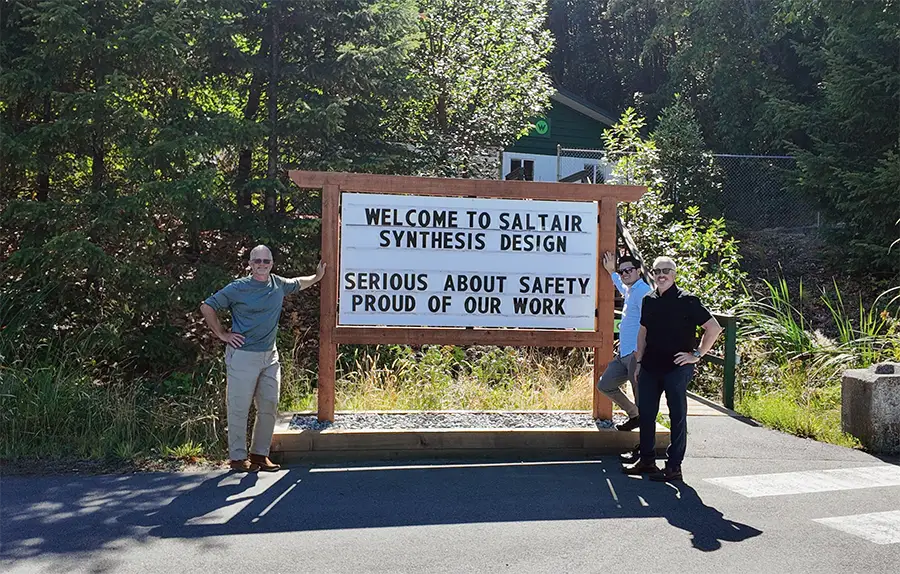
Curtis: Yes. Western explained that the product was still in development, which gave Synthesis an opportunity to be involved in the process.
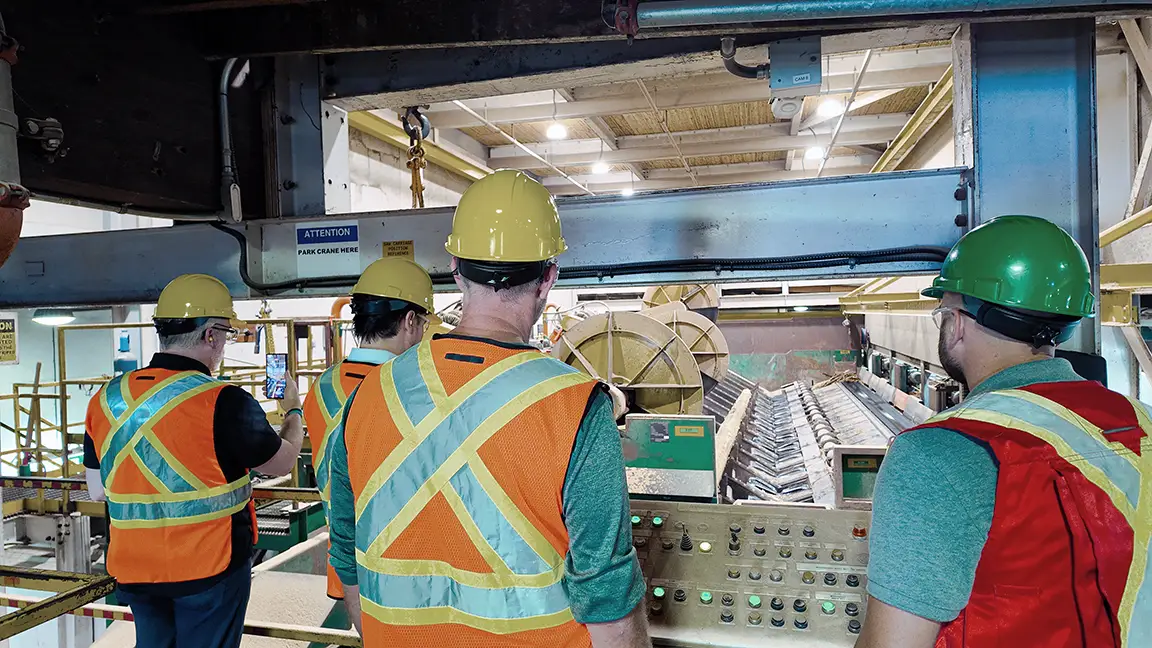
We could test the material, offer suggestions, and help showcase a new B.C. wood innovation. Rather than simply selecting a finished product, we gained firsthand knowledge of the material as it was being developed and better understood where it could fit in future residential and commercial projects.
That direct experience also helps us advise our clients as new wood products for designers become available.
What did you take away from the forestry side?
Curtis: Being exposed to all aspects of the forestry industry gave us an even greater respect for wood.
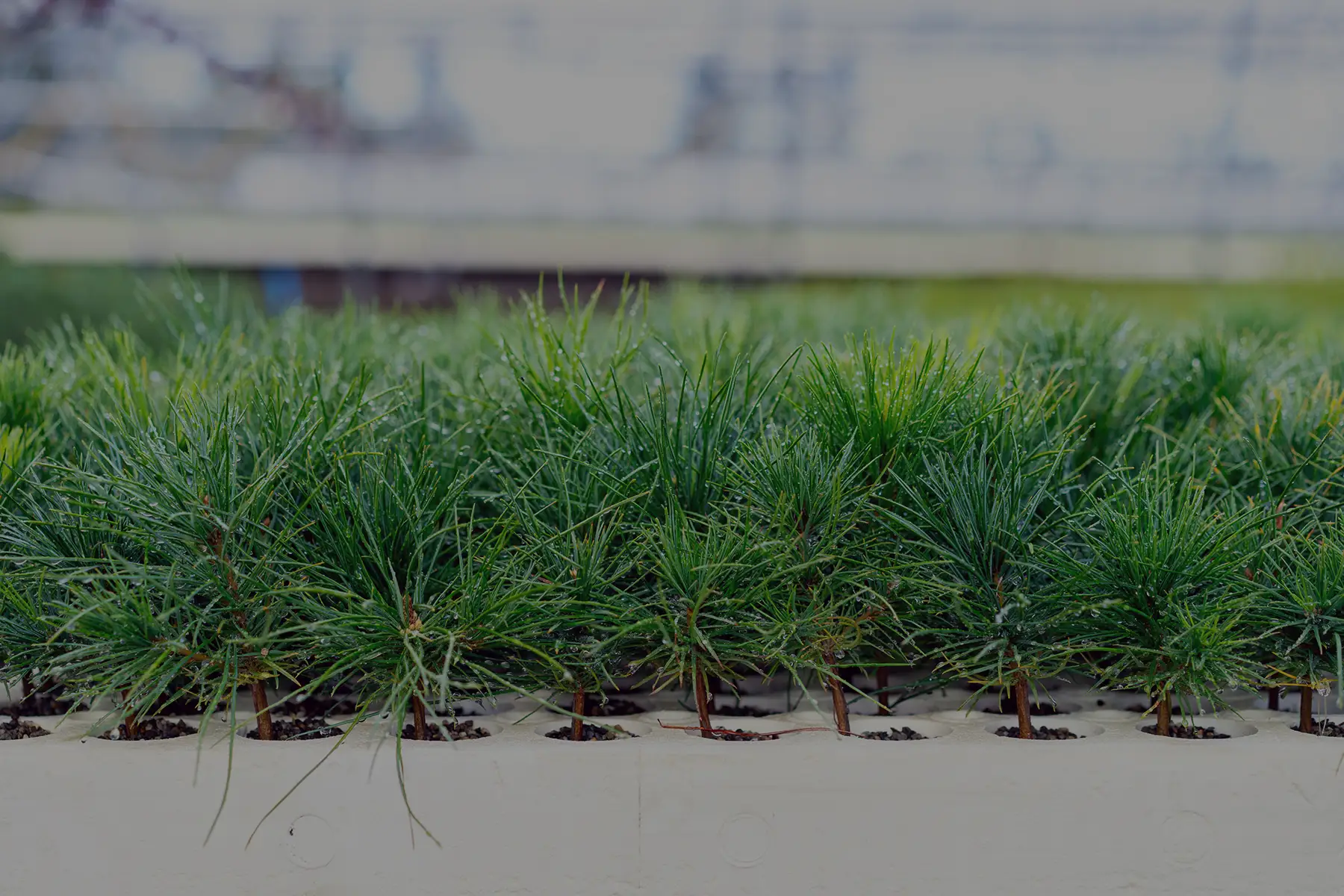
From the care taken at the nursery and orchard, to the decades-long preplanning behind the future direction of our coastal forests, to the detail involved in reforestation, we feel an even greater responsibility to be good stewards of each wood product we specify.
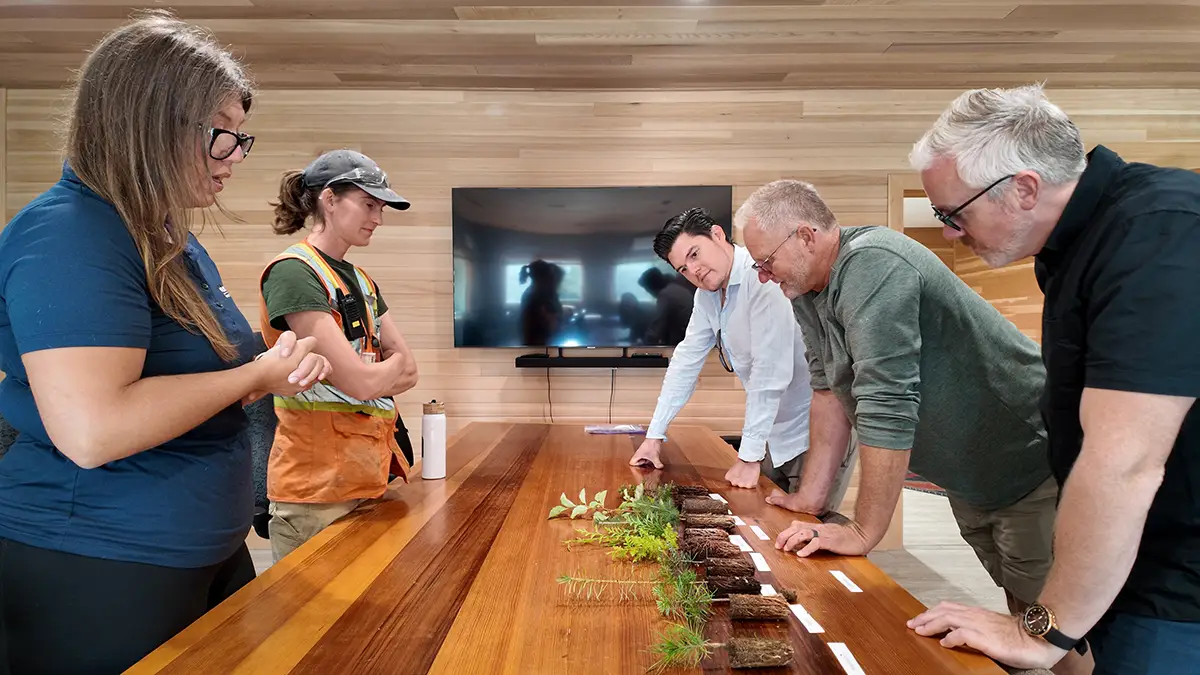
Seeing where the journey begins gives a finished piece of wood a very different meaning, especially when thinking about sustainable wood design and the responsibility designers have when choosing materials.
What changed after seeing a log move through the sawmill?
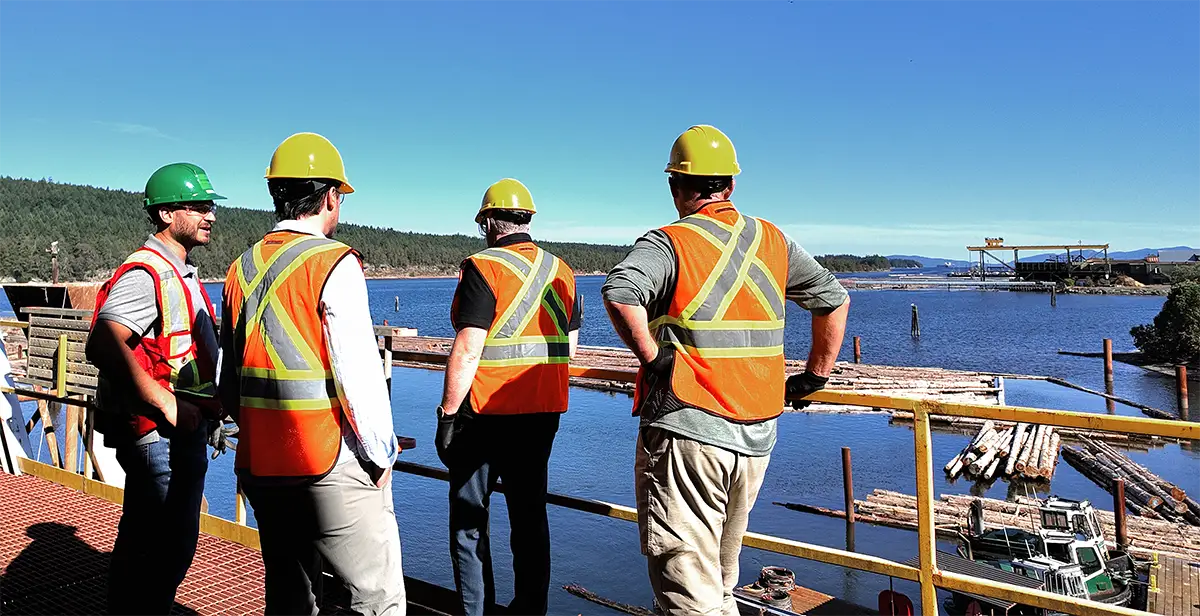
Curtis: Seeing a log raised out of the water and then watching it move through the steps required to turn it into lumber gave us a newfound respect for the process.
We were also surprised by how much goes into maximizing each log. There is a real balance between technology and the hands-on knowledge of the people working in the mill. It is much more complex than most people would ever see from a finished piece of lumber.
What was it like seeing how thermally modified Hem-Fir is produced?
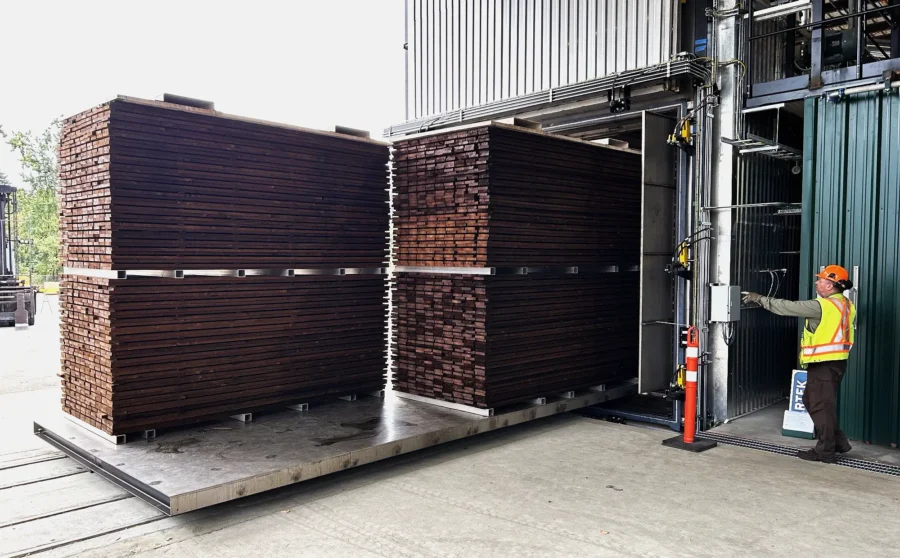
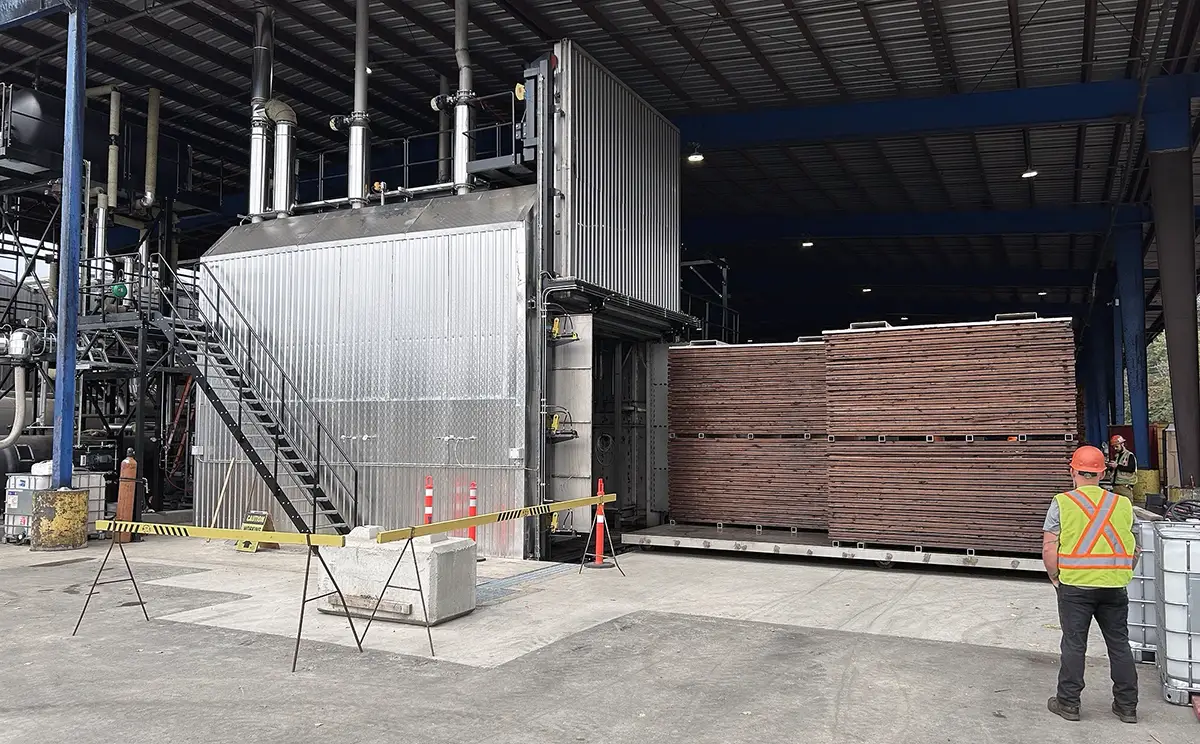
Curtis: Seeing the thermal kilns and the process firsthand was equally inspiring. By that point in the day, we had seen where the fibre starts, how the log is processed, and how the Hem-Fir is thermally modified.
It confirmed our choice to feature Western’s thermally modified Hem-Fir in STILL/not still at IDS Vancouver and helped us better understand the potential of thermally modified wood design.
What stayed with you most?
What stood out most was the knowledge, passion, and commitment of the people we met at Western. From forestry through manufacturing, there was a clear sense that people understood their part in the process and cared about the future of the resource.
It reinforced what can happen when local manufacturers and local designers work closely together. We learn more about the material, manufacturers learn more about what designers need, and together we can explore new uses for B.C. wood.
Thermally modified wood for architecture and design
At the time of writing, Western’s thermally modified Hem-Fir is moving through fabrication at Lauten Woodworking. We are documenting the process behind the scenes, following the material as it moves from individual pieces of Hem-Fir into an architectural experience at IDS Vancouver.
Join us at IDS Vancouver, where visitors will experience the final expression: a contemporary coastal forest created from thermally modified B.C. Hem-Fir, where movement continually changes perspective, and everyone is invited to find their own path.
Behind it is the work of foresters, mill teams, product developers, fabricators, and designers, all connected through the same commitment to innovating B.C. fibre.